



In the fiscal year of 2024, Georgetown was allotted $195 million in federal research support, which came predominantly from the National Institutes of Health and the Centers for Disease Control.
Since the start of President Trump’s second term in January, significant cuts in research and education funding have been made. With a projected $35 million annual loss, many university research projects have been disrupted or terminated and graduate fellowship programs have been eliminated. Georgetown is currently working to secure alternative research funding sources.
As part of the Professor Research Series, the Voice sat down with research professors across a variety of disciplines to discuss their careers and recent projects.
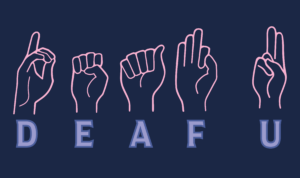
Dr. Ted Supalla is the director of the Sign Language Research Lab, which studies the history, structure, processing, and acquisition of signed languages. Supalla engaged in a discussion of his past research and future goals for the lab.
This conversation was interpreted by one of the lab’s supporting staff members, Jennifer Joy Vold, and was edited by the Voice for clarity.
The Voice: How long have you been teaching at Georgetown?
Supalla: I’ve been here since 2012, so coming up on 15 years. Since I’ve been here, I’ve actually been affiliated with the medical school, which is unique. I never saw myself doing research on American Sign Language (ASL) as a part of the medical school. It was an exciting opportunity, so I took advantage of it.
The Voice: Why did you come to Georgetown?
Supalla: The other reason why I came here is because of Georgetown’s proximity to Gallaudet University and the reputation it holds for its role in Deaf Studies and historical research on ASL. So the proximity to those resources is very pertinent to my research. This role is a full-time research position, one of the benefits you get of being a full professor means that you can focus on your many research questions that you’ve been thinking about your whole career that maybe you haven’t been able to pursue if you’ve also had a large course load.
The Voice: Can you provide a brief overview of the kinds of research you conduct?
Supalla: Our driving question still remains to understand the emergence and evolution of signed languages, in particular ASL because it has a 200-year history and is built on French Sign Language. A lot of what we think we know about the history of sign language is really more like folklore, and it’s been unsatisfying to me to just hear stories or how people think it was passed down. I wanted to understand in more detail how languages get imported and exported. In understanding the origins of ASL in French Sign Language, I basically worked on what I call “Sign Language archaeology” with my collaborator Particia Clark, also at the University of Rochester. Our book came out in 2015.
The Voice: When did you start the Sign Language Research Lab?
Supalla: This work started at my previous institution, where I was for 25 years at the University of Rochester. The through line of my work has always been ASL. Sometimes I’ve been affiliated with linguistics departments, sometimes I’ve been affiliated with brain and cognitive sciences departments. At the moment I’m in a neurology department, but my training is as a psychologist. I started out studying how signed languages emerged and where they come from. All of the grants that I’ve pursued have been to that end. When I moved here, that’s when I started the Sign Language Research lab. I got a second round of a grant from the National Science Foundation (NSF) and was able to hire research assistants and up my research.
The grant cycle has now ended. I wasn’t able to keep the research assistants and students that I initially had when I came here. I’m now a team of one, we’ve downsized. So I started out with a fuller team at the lab, but I’m now in a phase where we’re looking for another grant. But in the current political context, that’s not as easy as it once was.
The Voice: What are some of your most recent projects?
Supalla: I have a second book forthcoming. My collaborator Matthew Malzkuhn initially was a member of my lab when he was pursuing his PhD. He was collecting data on how people in the Deaf community created home movies. The reason that he chose to focus on that is that initially when that technology was available there were no audio tracks, and that was the cause until about 1970. A lot of home movies prior to 1970 haven’t been studied because hearing people couldn’t capture audio, so the researchers didn’t feel like they were worth studying. But Deaf people or signers weren’t limited by the absence of an audio track. Our language could be captured on video and home recording technology was very popular among Deaf people, earlier than it was among hearing people. We call attention to home movies because this is documented footage of our histories, our ways of life, effectively in a private setting. For me personally, the other advantage that I get is that I can look at their language use. I can use that data to fill in gaps and really create a full, sequential 100-year’s worth of documentation of ASL on video, not just in formal settings, but in Deaf clubs and people’s homes.
The Voice: If a student was interested in getting involved with the Sign Language Research Lab, how would they go about that? Is sign language fluency a prerequisite for research?
Supalla: ASL fluency effectively is a prerequisite because of the nature of the research that we’re doing. You have to understand the language that you’re studying in order to analyze it. We’re studying forms of signs in detail, just as if you were to pursue the linguistic study of a language. Some say that you can study any language as long as you have the right linguistic tools, but I would argue that you can study any spoken language if you have the standard set of tools that you get from linguistics. ASL is a different formal system that does require expertise. I’ve not been able to study spoken languages in the same way that hearing linguists have, and I would argue that the same is true with signed languages. I still have a lot of things on my research agenda that I’m not done with and I’d still really like to work on. So it’s been a challenge now that there aren’t other resources, like there’s not an ASL program here at Georgetown. I don’t have the student population here that has the type of skill set that would lend itself to my program and that’s an issue that is still unresolved for the time being. It’s sad and I think that it’s unfair to students. I understand the situation and I would love to provide an opportunity. Even at Gallaudet, they don’t seem like they have the infrastructure for really working cross-institutionally. This challenge, it’s not like it’s unique to Gallaudet or Georgetown, or even D.C. I found issues there that impose limitations and then you just have to prioritize what you can do depending on where you are.
Students can learn about the results of Dr. Supalla’s research in his published articles. Dr. Supalla is not able to accept student researchers at this time. In the fall of 2026 he will be teaching a new linguistics course titled “Sign Language Science: History and Structure of Signed Languages around the World” for upper-level undergraduate and graduate students. The course will focus on the science, history, and structure of a wide range of the world’s signed languages.
In the meantime, students interested in ASL and other signed languages are encouraged to contact the Linguistics Department, the Georgetown Disability Cultural Center, or the Georgetown Disability Alliance, all of which can connect them with resources and opportunities on campus.
Have a professor you want to nominate? Email your suggestion to news@georgetownvoice.com.