

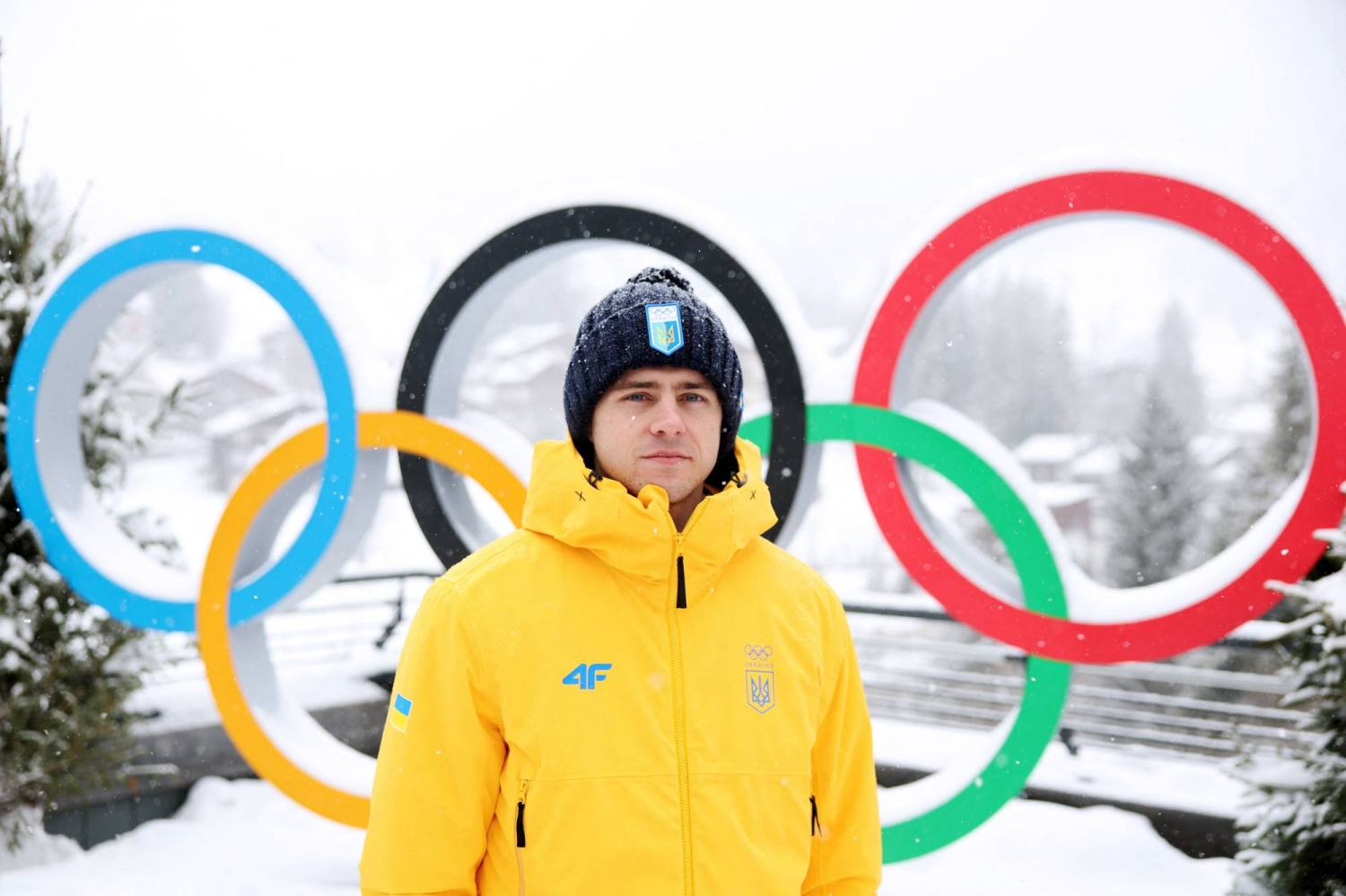
“The Olympics should remain apolitical,” adamant voices of neutrality, including the President of the International Olympics Committee (IOC) Kirsty Coventry, claim. A month ago, the IOC disqualified the Ukrainian skeleton athlete Vladyslav Heraskevych for wearing a helmet that pictured 20 Ukrainian athletes who lost their lives due to Russia’s invasion of Ukraine. The Committee banned the wearing of the helmet on the premise that it is “political.” But so was the Russian flag worn on Italian snowboarder Roland Fischnaller’s helmet. The IOC called this a “historic tribute,” and since it wasn’t seen as political, they let it slide.
Suppressing the free speech of Ukrainian athletes in favor of “neutrality” is actually political itself. Heraskevych’s helmet was a thoughtful mark of remembrance—a powerful reminder for the international community that despite games and competition, Ukraine is still at war. The IOC’s inconsistent policies have unfairly silenced the support for Ukraine, permitting ignorance of Russia’s war crimes. As an internationally-televised event, the Olympics inevitably affect public opinion.
Sports, art, and any other forms of personal expression are inseparable from politics. Everything is political, even if the IOC fails to recognize it. If the Olympics are supposedly apolitical, then why are Russia and Belarus not allowed to compete in the first place? This question was asked by many in response to Heraskevych’s disqualification. Unfortunately, the IOC must have misinterpreted it. Instead of reflecting on this argument and accepting Heraskevych’s appeal to compete, the IOC allowed Russian and Belarussian athletes to perform at the Paralympics under their nations’ banners to promote this false narrative of “apoliticism.” One could imagine what a conversation between Heraskevych and the IOC would have looked like:
“Hey, IOC, do you think it is inconsistent that you forbid Russians from the Olympics, yet permit athletes to wear Russian flags, then disqualify those who express support for Ukraine in the same manner?”
“You’re right, that is inconsistent.”
“I’m glad we could reas-”
“Russians shall return to the Paralympics!”
Permitting Russian athletes to compete under their flag and country name suggests that more than 200,000 war crimes that Russia has committed against Ukraine are exonerable. It signals that Russians should be proud to represent their corrupt and warmaking government, and the international community should smile, cheer, and applaud.
There is a stark difference between demonstrating politics through protesting war in your home country, and supporting the country that is perpetuating this war. Ukrainian athletes refuse to fall for the IOC’s violation of its own rules that prohibit political demonstrations during the games.
While Russian Paralympians got to compete under their flag, Ukraine’s Paralympics team was banned from wearing their ceremonial uniform that featured a map with Ukraine’s internationally recognized borders, including the five territories currently illegally occupied by Russia. The IOC, yet again, called it political. If the IOC considers basic geography “political,” then they should at least have the courage to stand on the right side of history and support Ukraine’s political expression, instead of squandering it. Moreover, the IOC issued an official warning to Ukrainian skier Oleksandra Kononova for wearing Ukrainian-colored earrings with the words “Stop War.” This was right after she won a gold medal. The list goes on.
Meanwhile, the full-scale invasion has passed its fourth anniversary. It has now lasted for almost as long as World War I. Counting the beginning of the war in 2014, with Russia’s unprecedented annexation of Ukraine’s Crimean Peninsula, the occupation is nearing its thirteenth year. Ukrainian students here at Georgetown have lived the majority of their lives in war, and if you care to ask me—or any one of them—what that is like, you will learn something new.
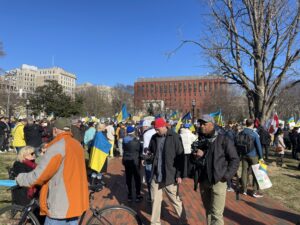
As politically-involved students, we have a responsibility to advocate for the enactment of international humanitarian laws. As a Georgetown community devoted to justice through organizations like the Center for Social Justice and the Jesuit values of peace, we have a duty to stand up and speak up for those who suffer at the hands of regimes who break these laws. As future policymakers studying at a consistently top-ranked university for politics, we must reflect on the choices that international institutions, including the IOC, make and the messages they send by feigning ignorance.
Listen closely when Ukrainians talk about why sports cannot be separated from politics. Spread awareness about how Ukrainian culture, people, and language are distinctly different from that of Russia. And urge the international community to emphasize Ukraine in the news and media—do not turn a blind eye on our fight for freedom, justice, and peace.