



Content warning: This article discusses gun violence and school shootings
A24’s The Drama (2026) sparked an onslaught of conversations, debates, and think pieces online, quickly becoming one of the most polarizing movies of the year. Some viewers loved it. Others hated it. Either way, the film prompted conversations that didn’t make their way into the Voice Leisure editor Lucy Montalti’s (CAS ’28) spoiler-free review.
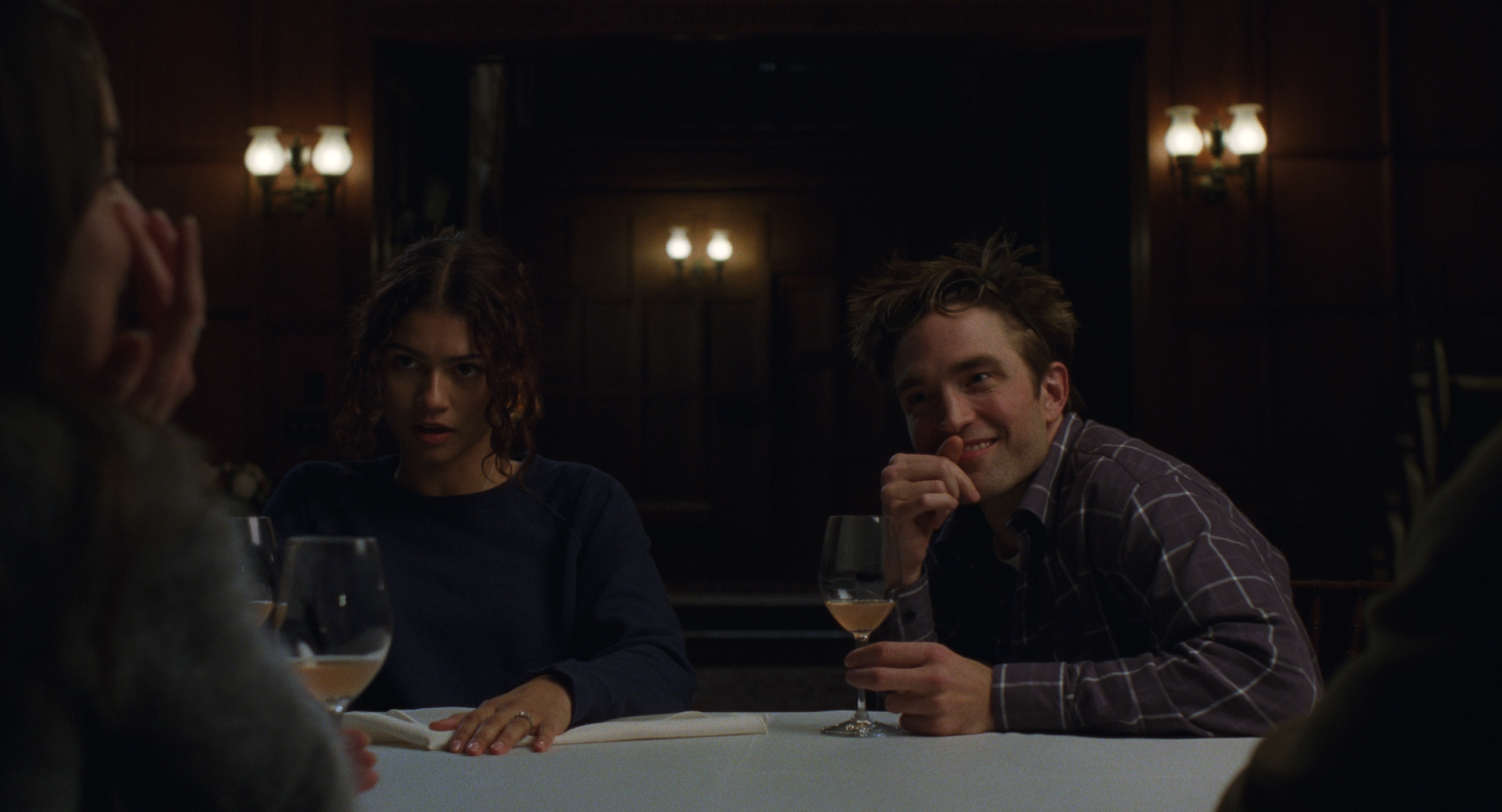
The controversy lies in the film’s premise: one week before their wedding, Charlie (Robert Pattinson) learns Emma’s (Zendaya) darkest secret—that, as a teenager, she almost carried out a school shooting. The revelation shatters the trust between the couple, and the fallout implicates their maid of honor and best man, Rachel (Alana Haim) and Mike (Mamoudou Athie), as well.
The film was generally well-received, grossing over $100 million in the box office worldwide and earning a Rotten Tomatoes score of 77%. Still, its handling of the topic of gun violence garnered criticism, with Tom Mauser, the parent of a child killed in the 1999 Columbine High School shooting, saying that the movie “humanizes” shooters and “normalizes” gun violence in an interview with TMZ.
The divided response to The Drama extended to the Voice’s office, so much so that our writers wanted to put pen to paper. So, now that the movie has had enough time to settle, here are Voice Leisure’s takes on The Drama:
In defense of dark art
By Karcin Hagi
The Drama isn’t about school shootings—it’s about love. The revelation that Zendaya’s character, Emma, contemplated committing a school shooting is abhorrent, but it had to be in order to accomplish the levels of distrust and discomfort among all of the characters. Had her character confessed to stealing a candy bar in the checkout line, the central tension wouldn’t exist. The grim reality of her adolescence forces Charlie to grapple with what it means to truly love someone. Idealized conceptions of love assume that a fixed, life-long compatibility between partners is the key to a long and healthy relationship; however, the idea of being compatible with Emma’s troubled teenage self is what haunts Charlie for the majority of the film. Their ultimate resolve to re-choose each other amid the chaos places a dynamic conception of love at the forefront—one that requires effort, intention, and humility. The depictions of gun violence are disturbing, of course. But they’re provoking, and their extremity is ultimately crucial in framing the critical questions about love and morals that define this movie.
A stressful, yet strangely cute approach to romance
By Quinn Ross
I’ll admit: I knew the plot twist before I went to see The Drama. On the surface, this movie is about gun violence and cheating. But more deeply, it’s about stigma, and how even the closest relationships can instantly deteriorate. The cortisol level of each character in this movie is high enough to kill an elephant, but nobody is willing to help one another. Charlie’s masculine fragility is appalling, and Emma’s struggle with homicidal thoughts gnaws at her efforts to differentiate her current self from her past. Every other character takes sides without ever acknowledging the traumatic events that led to the behavior they so harshly condemn. However messy every character’s relationships ended up, I found the final scene strangely cute. Even though Charlie had just gotten roughed up by Misha’s (Hailey Gates) boyfriend for kissing her and Emma’s ideal wedding came crashing down around her, the movie ends with Emma reintroducing herself to her husband. The two restart, and they choose to place more importance on their future rather than replay their tumultuous past. The Drama is infuriating and chaotic, but it’s also a fresh, unique romance movie that commands viewers to think twice about their judgements of others.
A failure of wedding planning
By Hudson Witte
As A24’s latest attempt to rework the out-of-vogue stylings of the romantic comedy into something suitable for the modern moment, The Drama succeeds only in outfitting its characters with beautiful clothes while failing to deliver a cohesive statement. The image of Robert Pattinson outfitted in a perfectly fitting hoodie and chic yet chunky shoes documents 2026 culture excellently, but movies, notably, are an audiovisual medium; the striking lack of any noteworthy score or especially soundtrack through the second and into the third after kills the momentum and gives up the hope of capturing the aesthetics and thus feel of the current moment. The quietude is obviously intentional, but for a movie that itself dramatizes song selection, the silence mostly feels like a missed opportunity. The whole framing device of wedding planning literalizes this tension about how to capture a moment, and just as the fictional wedding goes awry, so does the movie as a work.
Provocation without a purpose
By Elizabeth Adler
When I watched The Drama, I was a five-minute drive away from the elementary school in my hometown that experienced a mass shooting in 2023. As someone who has seen firsthand the effects of gun violence in my community, I left the movie theater feeling sick to my stomach at how wildly insensitive the premise was. The Drama failed to make a compelling argument about gun violence, instead trivializing the matter and profiting off the shock factor for a few cheap and, honestly, unfunny jokes—it was provocative with no purpose. Jokes about a photographer “shooting the wedding party” placed right after more serious discussions of gun violence take away from the gravity of the central issue at hand, allowing the audience to relieve the tension and discomfort they may feel from witnessing suggestions of violence. However, I believe that it is harmful to shy away from this discomfort. Blanketing the instinctual distress that gun violence brings with lighthearted jokes only distracts from the fact that we should be feeling uncomfortable and upset—we need to sit with our unease instead of laughing it away because anger, not humor, brings action. While it is valuable to address important topics in creative ways through art, gun violence is not ever a matter to be taken lightly. The filmmakers’ callous handling of such a delicate, traumatic topic left me reeling. It is important to talk about difficult things, but making a comedy movie about gun violence is incredibly inappropriate and solves none of the massive issues that America faces concerning firearms.
What do you know about love?
By Aubrey Butterfield
I liked The Drama, I think. The outrage sparked by a non-American director juxtaposing the real trauma of American school shootings with the moral failure of cheating in the midst of gorgeous wedding visuals portrayed by two of the most widely-beloved actors of our generation is, admittedly, understandable. But something about Charlie’s descent into madness at the revelation that he truly didn’t know his partner—which had me just as anxious as Charlie himself—gripped my attention. I’m not saying that The Drama is relatable, or even realistic (I mean, what kind of dad talks about his daughter’s fascinations with rifles at a wedding speech?). But I think it asks questions and presents scenarios that truly hold prevalence in modern-day relationships. Even outside of the main couple, the arguably more intriguing dynamic of Rachel and Mike’s relationship, painted in macroaggressions against Black Americans within Rachel’s assumption of her Black husband’s proximity to guns and her “secret” of directly harming a disabled child excellently illustrated how our points of view blind us from objective truths about our lovers. Can we ever really know our partners? If we can’t, is love ever safe? I don’t know if the subject matter of school shootings was integral to the film’s asking of these questions, but the questions themselves hold value and left me content in my viewing of the film.
The Drama at least gave us something to talk about
By Sydney Carroll
To me, the purpose of making a film like The Drama became apparent when Pattinson asks, “If there’s a shooting practically every single day, imagine how many people must have thought about it or, like, planned one, or even got close?” This line of dialogue is overlaid on B-roll of people walking on city streets, begging you to ask, “Has he? Has she?” The Drama is certainly not perfect in addressing school shootings—there are attempts at humor that makes you question its intentions, a glaring omission of the ways that the races of its stars play into their relationships to gun violence, and keeping the film’s premise a surprise opens up survivors of gun violence to unnecessary trauma in theaters. However, in a country that fails to address the root of school shootings—the literal blood oath our government has forged with the National Rifle Association (NRA) and gun manufacturers alike—The Drama refuses to see mass shootings as an isolated incident. Rather, it asks us to consider this epidemic as something not removed from our daily lives but embedded in it. As the alt-right pipeline and increased polarization tempt individuals like Emma to use a weapon we’ve made all-too-easy to obtain, considering just how many people could partake in a school shooting is vital. This film is not a perfect response to our country’s gun violence epidemic, but I believe the conversations it provokes make it a worthwhile watch. Walk away with a take like Karcin’s, that the movie is provoking, or Elizabeth’s, that the movie fails to extract humor from needless violence, but let’s at least walk away with takes and start making gun violence and its omnipresence in our lives a daily conversation.