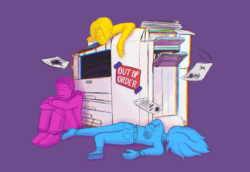



Nauseous, short of breath and a little dizzy, I jumped out of bed and e-mailed a Canadian I’d met while traveling in Europe this past summer. I proposed to him, a “marriage of convenience.” Since then, it’s been an emotional rollercoaster. Depressed one day, my roommate could barely coax me out of bed. Angry the next, I impulsively drew a mustache on the Bush picture hanging on a friend’s door.
As I was apologizing for this act of mischievous vandalism, I noted a fellow Kerry supporter calmly folding her “Pro-Choice, Pro-Kerry ” sign and then tearing it into a dozen pieces in a sudden, violent rage, shrieking as she lobbed each piece into the dumpster with all her might. She let out a sigh of relief, looked up and smiled calmly at me. After she returned to her room, I realized something: I am not alone.
In times of extreme emotional distress, there are certain steps many mourners pass through in the grieving process. They are commonly regarded as the “five stages of grief,” and because I have passed through each and made it back to normalcy, I want to remind you that, eventually, you will too.
Shock
I’d heard the news and, quite honestly, I’d seen it coming for some time. Yet, I could not, would not believe it. When reality does sink in, moving you to the next stage, the insight is usually accompanied by some type of emotional release, such as screaming, yelling or throwing blunt objects at conservative friends.
Depression
I couldn’t go to class and wondered if studying abroad in Europe would be worth the constant ridicule. Physical symptoms of grief usually manifest themselves at this stage as well. Compulsive eating (think Choco-taco, king-sized bag of M&M’s and a school of Swedish fish all in one sitting) and prolonged nausea are two of the most common examples. Many of us have lost faith in our fellow countrymen (at least 51 percent of them). Although this grief can be overwhelming at times, the sense of hopelessness will eventually decrease, turning into rage.
Anxiety and Hostility
As I came out of the listlessness of my depression, my strength returned in the form of unreasonable anger and aggression. Whether through compulsive exercise, meditation or binge drinking, it is important to vent this rage. Thank God that with a campus as conservative as Georgetown, it’s easy to find an innocent, Bush-supporting victim to irrationally lash out at, especially in the business school.
Denial
This stage may appear intermittently throughout the grieving process. And, whether you’re still insisting on counting Ohio’s provisional ballots or researching electronic voter fraud, denial can take many forms. There are still times when the thought of four more years of Bush’s speeches make me wonder if there was something else I could have done to prevent this situation.
Guilt
What if I had only given $50 more to the Kerry campaign, or convinced one more liberal friend to vote? You may try to make up for this guilt in a state called “bargaining,” which means doing everything possible, no matter how futile, to reverse the results.
Healing of Memories and Acceptance of One’s New Role in Life
Eventually though, I realized all I can do is make the best of the situation. Frankly, I plan on using my parents’ tax cuts to buy an iPod for the plane ride to my Vancouver wedding. At least he has a cute accent, eh?