Archive

  • By Month

September 2009


Voices

Sibling love from the backyard to the battlefield

“You’re the look-out. So you can’t fall asleep, otherwise we will fail our mission,” Stuart said. “If you complete your mission, you will be promoted to a lieutenant sneak. You... Read more

Editorials

This fall, take advantage of RAD

The Department of Public Safety, in conjunction with the Women’s Center, the University’s Human Resources Department, and several other on-campus groups, has finally succeeded in securing funding for the program, first announced by DPS last fall and scheduled to begin the middle of next month. RAD, the country’s preeminent self-defense program, teaches women physical defensive methods and instructs them about risk reduction, awareness, avoidance, and recognition, and should be especially advantageous for Georgetown students in light of the recent assaults

Voices

NSO overload leaves former freshman feeling cold

Only one short year ago I was an incoming freshman—soon to be alone and already scared.  This is where New Student Orientation is supposed to help you. On the whole,... Read more

Voices

Slim health facts can’t hide expanding waistlines

Of the various health care bills currently floating around the House and Senate, the late Senator Ted Kennedy’s committee on Health, Education, Labor and Pensions (HELP) wrote the one with... Read more

Editorials

AlcoholEdu: a lesson in futility

At times, AlcoholEdu’s stories and graphics are so outdated and out of touch that they make the cheesy Academic Integrity tutorial seem like gripping edutainment. Another solution is needed to get across the important message of how to drink alcohol safely.

Voices

Waxman-Markey overlooks outsourced emissions

With the passage of the American Clean Energy and Security Act (also known as the Waxman-Markey cap-and-trade bill), the House of Representatives took a bold step to address the long-neglected... Read more

Features

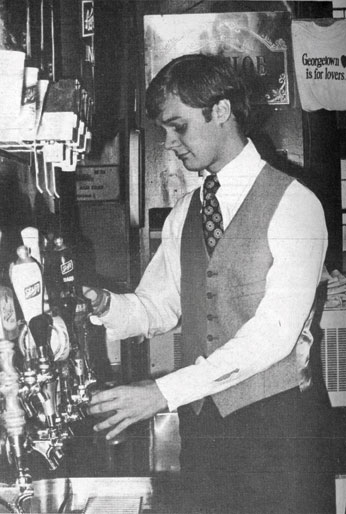
From dry to debaucherous: Georgetown through the ages

It was late August, and students returning to Georgetown from their summer vacations were shocked to find that the campus party scene had become the polar opposite of what it had been only the previous spring. The administration had introduced a new drinking policy, eliminating the tacit approval that students had long felt they had received from the school to work hard and party harder. Suddenly, Georgetown students faced keg limits, party registration deadlines, and ominous sanctions against anyone who facilitated underage drinking. Student resentment grew as campus security gained notoriety for party-busting, and the party scene languished, culminating in student protests. The administration, students felt, hadn’t just made it harder for underage drinking to take place—the administrators had violated Georgetown’s very culture.