

When Georgetown hosted UConn this past January, the atmosphere was electric. Capital One Arena echoed with chants and cheers from over 17,000 fans, the largest home crowd in nearly a decade. But it didn’t feel like a home game at all. The volume didn’t belong to the Hoyas. “Let’s go Huskies,” reverberated from the upper deck. Hoya Blue was present, but red and navy stole the show.
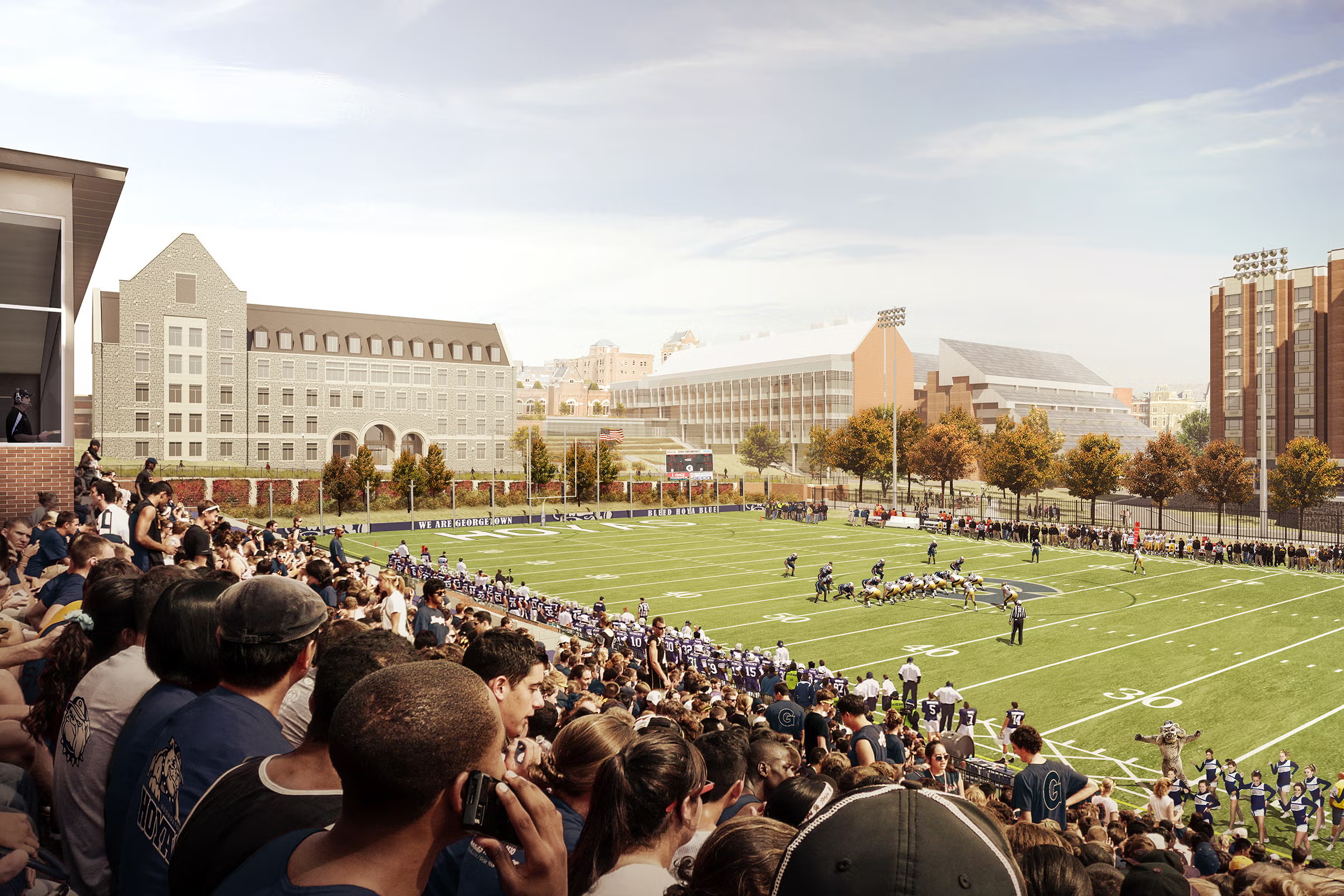
Football games at Cooper Field routinely draw just 2,000 to 3,000 spectators—a number that may sound decent until it’s put in context. Davidson College, with 2,000 undergraduates, averages more than 4,000 fans per game. The University of Richmond, home to around 3,000 undergrads, pulls over 6,000. Georgetown’s turnout rarely approaches even half its student body, and much of the crowd is often composed of parents or alumni. Even basketball, the crown jewel of Hoya athletics, reflects the same trend. Though the men’s team plays in the 20,000-seat Capital One Arena, average home attendance only recently inched above 6,700 per game, barely a third of the building’s capacity. And that number includes non-students, with major games often overwhelmed by visiting fans.
For a university steeped in tradition, ranging from not stepping on the seal to the Healy howl, the Hilltop has grown remarkably quiet when it comes to one of its oldest: school spirit through sport. Once a point of pride and a source of shared identity, over the past decade, Georgetown athletics have played to half-empty stands and scattered applause. The tradition hasn’t disappeared, but it hasn’t kept pace with the lively, engaged campus culture either, and in that gap, something vital has been lost.
My father, a Georgetown alumnus, still remembers lining up outside McDonough Arena for student tickets when Allen Iverson played. He talks about Hoya Paranoia like it was inherent, something you felt just by walking across the front gates. When walking through the front gates for the first time, I wanted to believe that version of Georgetown still existed. But most of my classmates don’t talk about games. Many don’t even know when they’re happening—homecoming is more about the rooftop than the game..
The issue isn’t logistics. Students receive free tickets to most home games—though offering free access to Capital One wouldn’t hurt—and the university provides shuttles, giveaways, and promotions at games. Nor is Georgetown’s student body generally apathetic. Students are politically engaged, socially conscious, and care deeply about the world around them. They show up, but not for Georgetown athletics.
That absence in the stands points to something detached from simply sports enthusiasm. The issue reflects a larger rift, one between students and the institution itself. In the 2023–24 academic year alone, student publications published over 40 critical opinions and news pieces about the university. These pieces addressed everything from Palestine solidarity protests to Title IX procedures, food insecurity, the future of Greek life, and housing frustrations. The Voice ran over 20 such articles; The Hoya published more than 15.
While student journalism has always played a role in holding the university accountable, the volume and urgency of recent coverage reflect a student body increasingly skeptical of institutional authority. They seem to view Georgetown less as a source of pride and instead a subject of scrutiny.
That dissatisfaction shows up in subtle yet symbolic ways. At many other schools, spirit is a shared language; something passed down through generations, not marketed. At Georgetown, it often feels conditional. Enthusiasm has to be earned. Pride is measured against principle. Whether that comes from a place of thoughtful skepticism or long-simmering frustration, the result is a campus where what should be unifying moments—buzzer-beaters, game days, homecoming weekends—can feel oddly muted, like applause arriving a beat too late.
This isn’t about blind loyalty. Georgetown students care deeply; they organize, advocate, and critique with rigor when pride in your institution also implies a constant desire for improvement. But somewhere along the way, that critical energy stopped coexisting with collective celebration. Part of that shift may be cultural. At present, Georgetown attracts high achieving, globally minded students who often find their primary communities in advocacy groups, pre-professional organisations, or causes that extend far beyond the front gates.
As a result, “school spirit” can feel frivolous alongside their professional aspirations, even contradictory when set against real institutional shortcomings. A steady erosion of trust, with issues like Palestine, housing, and institutional transparency taking center stage, has led to detachment. When students feel dismissed or disillusioned, the instinct to rally around Georgetown, even in innocuous ways like a basketball game, begins to fade. Sports, once a reliable stage for campus unity, now feel like a vestige of someone else’s Georgetown.
None of this means students don’t care. They do, deeply. But when pride is tempered by disappointment, and connection overwhelmed by critique, communal joy becomes harder to access. Spirit isn’t incompatible with seriousness. In fact, a campus that can rally in joy as well as protest is one that’s fully engaged—not only with its flaws, but with its potential too.
Students don’t need slogans; they need institutions that earn their trust. But students, too, should consider showing up—not just to challenge Georgetown, but to claim it. No one else can fill the stands for us. And no tradition sustains itself without someone to carry it forward.