

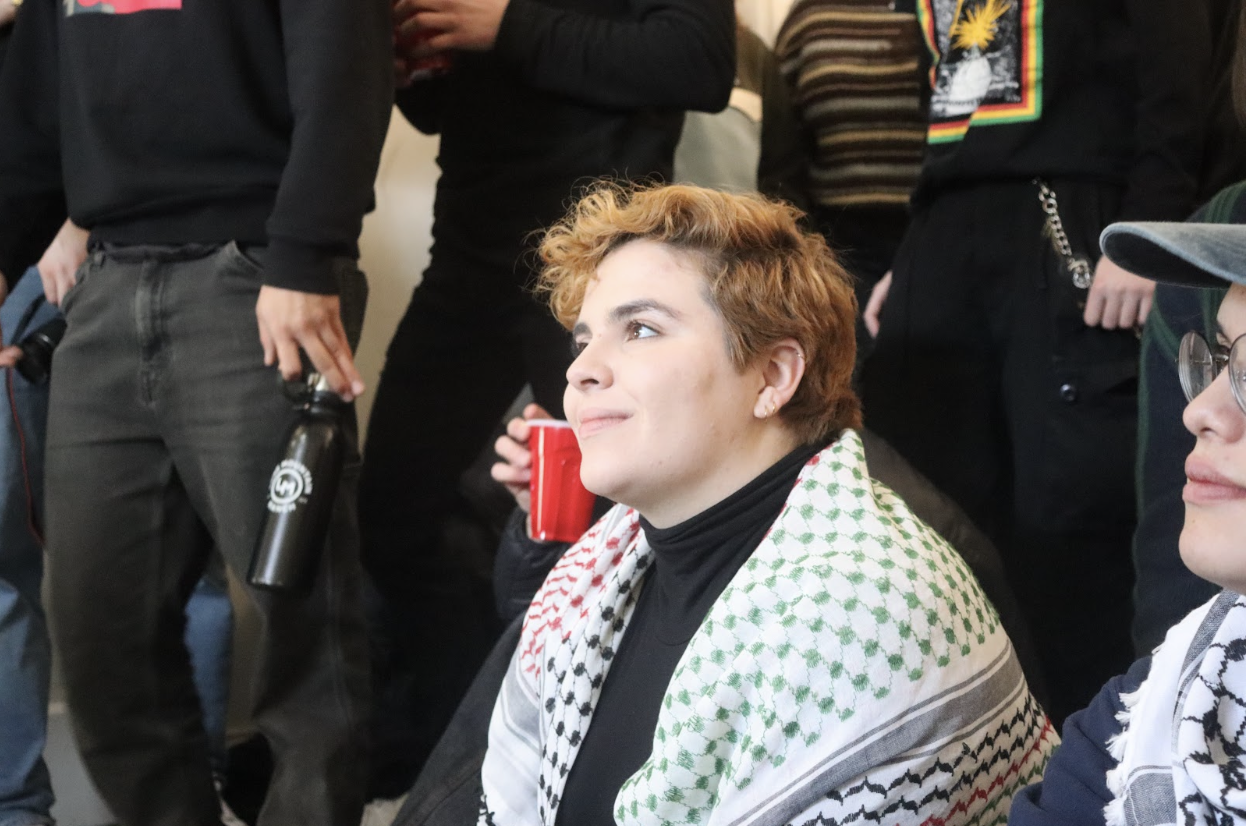


After Nick Hasbun (CAS ’28) finished his semester learning about democracy in India in Majoritism and Minority Rights in South Asia, he wanted to support his professor, Dr. Badar Khan Suri, through his current legal battles. This support manifested itself on Feb. 8, in the form of a solidarity concert that contributed over $3,400 in donations to Khan Suri’s fundraising campaign.
Khan Suri is a Georgetown post-doctoral fellow that was taken into custody by Department of Homeland Security (DHS) agents outside of his home, despite having a visa. Although released in May, Khan Suri is raising money for over $70,000 in legal fees, fighting both a suit challenging his original arrest and a case regarding his immigration status—ongoing after an immigration court declared Khan Suri deportable.
In order to find a tangible way to support his professor, Hasbun was inspired by organizing efforts on campus last semester, such as the Georgetown Coalition for Worker’s Rights (GCWR) Labor Solidarity Concert. The concert aimed to promote community support for the Georgetown University Transportation System (GUTS) bus drivers in the face of potentially losing their status as Georgetown employees.
Hasbun explained that it’s easy to comment on Instagram to show support, wishing Khan Suri “all the best.” But Hasbun also emphasized that it is important to show support with a “physical manifestation” of solidarity.
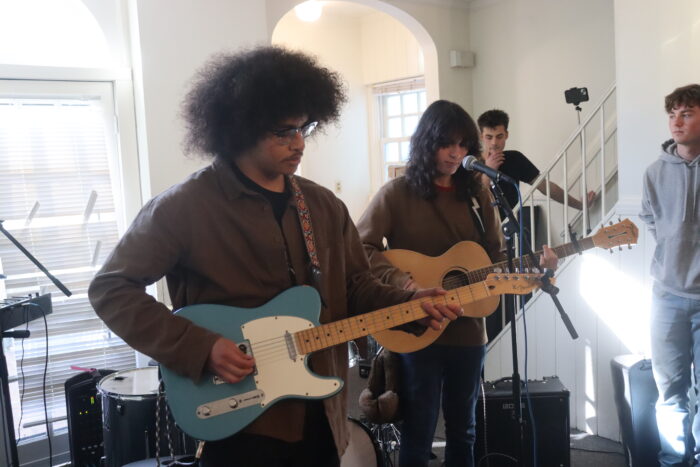 Photo by Julia Carvalho
“We have to go past that,” he said. “It’s really easy to feel like you’re powerless, and there’s not much you can do in light of situations like this, but in this particular situation, there is a very clear way we can help [Khan Suri] out.”
Hasbun, along with other students in the class, began organizing the concert to encourage donations to the online fundraising campaign Khan Suri’s wife, Mapheze Ahmad Saleh (G ’26), organized to support their family.
Khan Suri’s struggles outside of the classroom never impacted his teaching, Hasbun said. He explained Khan Suri was always humble and generous—even hosting the small class for an end-of-semester celebration dinner in his own home.
“Despite everything that he’s going through, he’s a very upbeat, very positive guy,” Hasbun said. “He really fostered such a positive, friendly, welcoming environment.”
Izzy Volpe (SFS ’27), another student of Khan Suri’s, highlighted how organically the event fell together, with students helping out where they could and connecting their clubs, such as the Georgetown University Students for Justice in Palestine (SJP) and the GCWR.
“We’re all just driven by our care for Dr. Suri,” she said. “Whether that’s time, whether that’s artistic energy, whether that’s money, baking skills, so many people are contributing so many different skills to this.”
As the co-director of the outreach and mobilization committee for Hoyas for Immigrant Rights (HIR), Volpe has been organizing bake sales led by the club throughout the weeks leading up to the concert to donate to Khan Suri’s campaign.
The event itself was free to enter, with suggested donations being made in exchange for food and merch, such as t-shirts decorated with the slogan “Fuck ICE.”
“Joy and solidarity doesn’t need to be made inaccessible through pricing,” Volpe said. “You don’t need to pay, but we encourage that.”
Volpe emphasized the importance of the “resistance in joy” expression she included in the online event information, explaining her first encounter of it in the teachings of Hannah Arendt, an American historian and philosopher.
According to Volpe, Arendt has an idea of radical joy, or finding happiness in the “infinite and the ineffable and just the miracle that it is to be alive” while under oppressive systems or conditions.
“Resistance is about creation and creating something new from your own reality and using that to help heal the world,” Volpe said. “To me, that is great joy.”
She connected the solidarity the Georgetown community displayed to the South African philosophy of Ubuntu, which she explained translates to “I am because we are,” referring to an interconnected web of humanity.
“That compels me to view myself as inherently connected to everyone around me. And so when members of a community are under attack, it is your duty, and your kind of natural calling—if you listen to it—to show up for them,” Volpe said. “I think that Dr. Suri embodies [global solidarity], and, in supporting him in a more personal way, you’re also supporting a broader collective.”
Five bands were part of the community that came together to personally support Khan Suri, including Georgetown’s music club Jam.
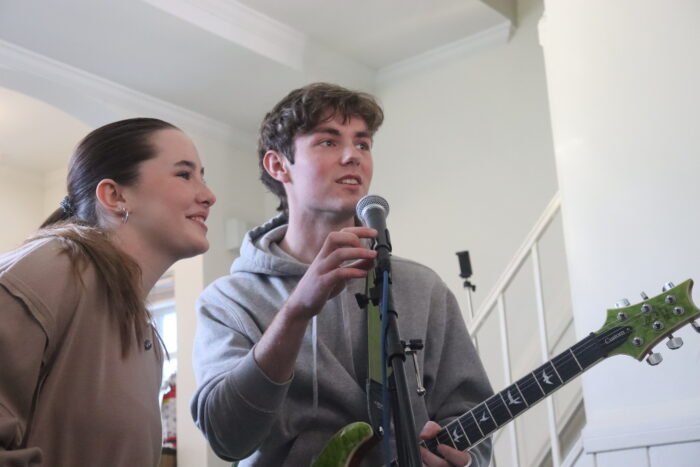 Photo by Julia Carvalho
Nina Ambro (CAS ’29), a member of Jam, loved performing at the event and said she was amazed by all the people who were able to attend.
“You can feel how strong the community is and the support for all the artists,” Ambro said. “There’s so many different types of music, so many different people, and it’s really good to just see the support for a cause that we all believe in.”
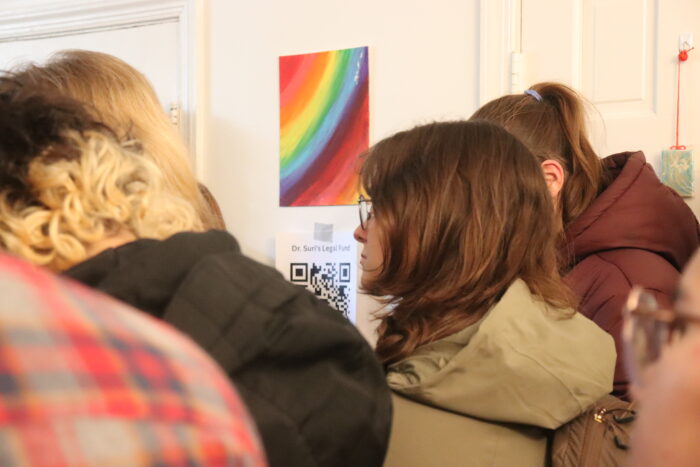 Photo by Julia Carvalho
Students came together and showed their support for Khan Suri, such as Cameron Mirmelli (CAS ’29), who appreciated the solidarity of the event.
“Not only a Georgetown professor, but to come together as a bigger community, obviously, is really needed right now,” Mirmelli said. “I’m so happy that there’s so many students on campus that actually really are coming out and coming together and putting together something like this.”
Khan Suri was also able to attend the event with his wife and family. Standing in front of a room full of students and community members, Khan Suri said he felt “extremely happy” to be there.
“They’re happy and for the cause, and this is what we want, courage and happiness together,” Khan Suri said. “These students make America what America is. I’m extremely proud to be surrounded by these kind of people.”