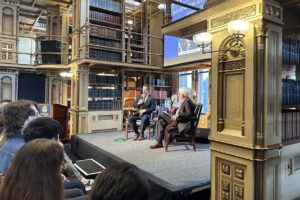


Students gathered on Sept. 8 at 7 p.m. with Georgetown University postdoctoral fellow Dr. Badar Khan Suri in the Intercultural Center for a teach-in ahead of his Sept. 15 immigration hearing. Participants gathered to discuss his experience in immigration detention, the ongoing legal battle against his deportation, and how students can support immigrants facing detention beyond the Georgetown community.
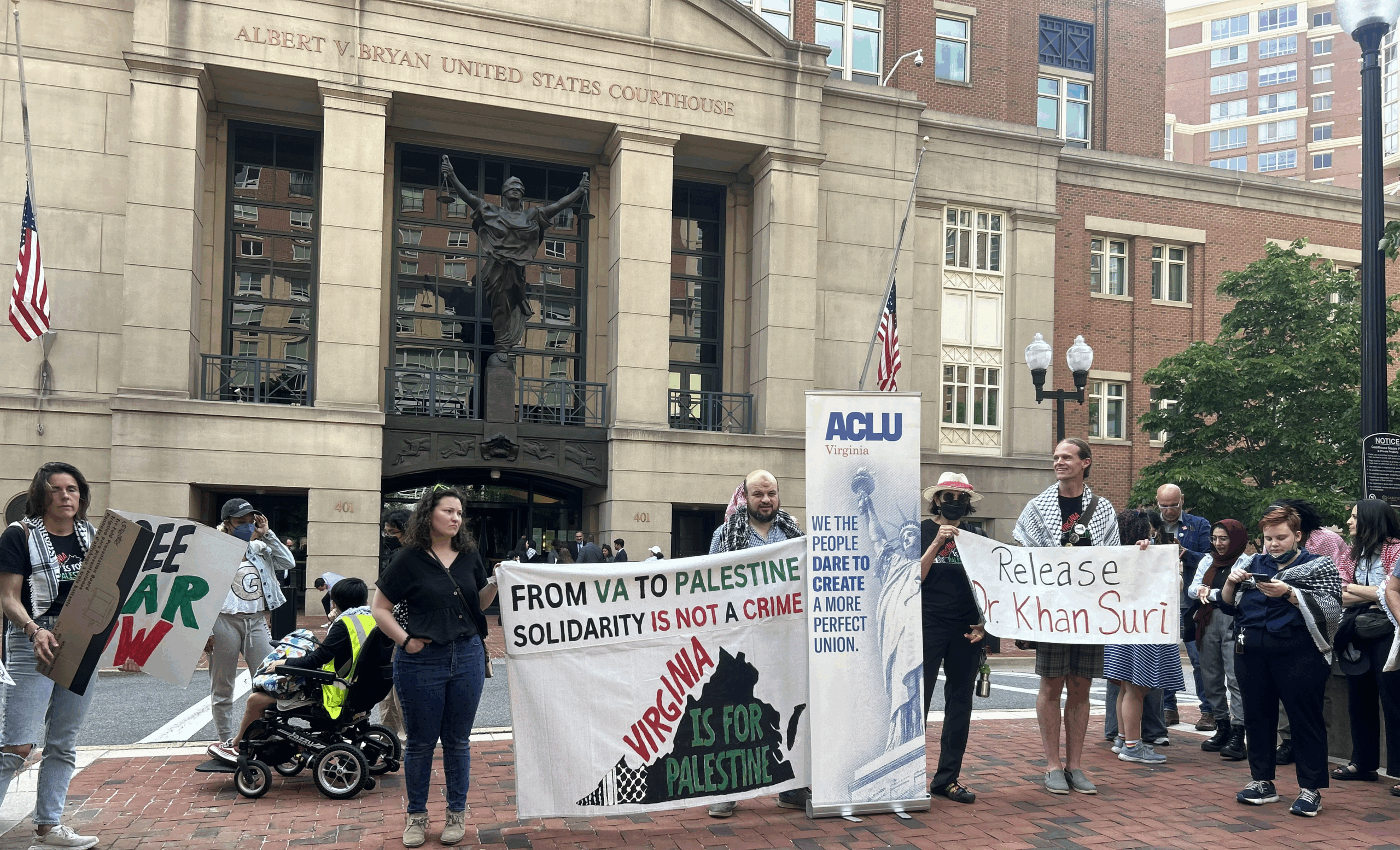
The event was autonomously organized by Khan Suri’s students with support from the School of Foreign Service’s Culture and Politics program and Prince Alwaleed bin Talal Center for Muslim-Christian Understanding (ACMCU), where Khan Suri is a postdoctoral fellow. Organizers said the event aimed to build student support ahead of the hearing, where the United States government will continue its effort to deport Khan Suri. At the end of the teach-in, students began making signs to bring outside the immigration courthouse on Sept. 15.
Khan Suri, an Indian national who resides in the United States legally, was detained outside his home in Rosslyn, Virginia in 2025. Khan Suri’s upcoming immigration hearing is separate from the federal court proceedings that have challenged his detention. The Fourth Circuit Court of Appeals recently rejected the federal government’s attempt to move his habeas corpus case out of Virginia, allowing the case challenging his detention to continue there. His Sept. 15 hearing, however, concerns the government’s effort to remove him from the United States due to alleged ties to terror organizations.
Izzy Volpe (SFS ’27), the event’s moderator and one of Khan Suri’s previous students, began the teach-in by explaining the intention for the event.
“I really want folks to recognize the importance of his case, not only because he’s a beloved member of the community and a human being, but because we have all these different generational fights going on that are kind of embodied through his case,” Volpe said. “So, we all have a stake in this case.”
Several students at the teach-in said Khan Suri’s case has raised broader questions about immigration policy and free speech surrounding the genocide in Palestine. Khan Suri’s case has become intertwined with questions of free speech, with his lawyers arguing that his detention was retaliation for protected speech criticizing Israel’s actions in Gaza and expressing solidarity with Palestinians amid the genocide.
To start the talk, Volpe asked the audience why they chose to attend the teach-in.
A first-year student, who said she had followed Khan Suri’s case before arriving at Georgetown this fall, raised her hand.
“I heard about this when I was still in high school, and it was one of the issues that really stuck with me,” the student said. “Now that I’m here at Georgetown, I feel like it’s important to get involved with this because it’s one of the intersections of all these issues, and it’s so close to this community.”
Another first-year student said he attended because he felt horrified by current affairs in the U.S., adding that it was important to recognize that “Georgetown is no exception to that.”
Between February and July 2026, immigration arrests across the United States increased by 70%. Georgetown was one of the first neighborhoods to see an increased Immigration and Customs Enforcement (ICE) presence after the Trump administration issued a “crime emergency” order in D.C.
Throughout the event, Khan Suri repeatedly expressed gratitude toward the Georgetown community, acknowledging that many others detained in similar circumstances had received far less public attention or institutional support.
“There were many,” Khan Suri said. “They didn’t get support, and many of them got deported.”
Suri also praised the support he said Georgetown had provided throughout his case, pointing in particular to communication from university administrators and continued programming focusing on the genocide in Gaza.
“I am at this very great institution,” Khan Suri said. “Georgetown is better than many other institutions. Be it Harvard or be it Columbia, they all punished their faculties and department. Georgetown didn’t do anything like this, and my department is having this Gaza lecture series.”
During the event, when a student asked Khan Suri whether he had known what to expect as the case against him developed, he described his arrest as deeply disorienting.
“I expected the United States government to take care of me,” Khan Suri said. “I expected them to stop this rubbish.”
Khan Suri also described the conditions faced during his two months spent in immigration detention, particularly difficulties accessing healthcare. After developing a toothache, he said he was told he would need to remain in the facility for six months before seeing a dentist. He also described another detainee whose infected tooth went untreated after an appointment was scheduled with the wrong date.
“If you are in any need of medical facilities, life would be very bad,” Suri said. “If you are sick, things are very bad. ”
But much of Khan Suri’s discussion centered not on his own circumstances, but on detainees whose cases never become widely known.
He described meeting individuals whose detention placed significant pressure on their families outside the facility, including a father whose daughter had to leave school and find work to care for a younger sibling.
When asked how the public attention had affected his case compared with others, Suri said that visibility could determine whether detainees received support at all.
“There were hundreds of others who no one knows about them,” he said. “Because no one knows about them, all they live by is the allegation which government put on them, and no support, nothing.”
For Khan Suri, this widespread awareness is itself a form of solidarity. “It’s all about what we see. Then only we can show empathy,” he said. “So it’s about knowing then, more than protesting.”
The conversations during the teach-in also broadened into questions about civil society and what responsibility individuals have to participate in democratic institutions, such as the ACLU. When a student posed a question about the United States’ increasingly overt authoritarian tendencies, Suri argued that citizens play an important role in shaping the political systems around them.
“What kind of country? What kind of society do they [U.S. citizens] want to make?” Khan Suri said. “I mean, any administration which is ruling is in a way a reflection of that society as well. So we create our society. We fix our society.”
A former student of Khan Suri’s argued that supporting him required more than following the legal case itself and required students to find community and solidarity.
“If we, as human beings, are not basically taking the values we treasure and actualizing them in this world and fighting for them and building the world that we want to see, then all of those formal rules kind of collapse,” the student said. “Building community number one is the most important thing.”
At the event, students also discussed ways to support other detained immigrants in the DMV area, including donating to mutual aid organizations and volunteering for letter-writing efforts.
Khan Suri remained grateful for the students’ show of support and continued to express his appreciation.
“The way you guys talk about me and show this solidarity, this is more than enough,” Suri said. “You guys should take this as a case study to build your societies, to build broken immigration system in your country.”
Organizers concluded the evening by turning attention toward the upcoming Sept. 15 hearing. They said roughly 30 seats were expected to be available inside the courtroom and encouraged students interested in supporting Suri to attend. Khan Suri said the hearing would begin at 8:30 a.m. and could last more than one day because witnesses are expected to testify.
Volpe stressed the importance of students supporting those in detention who lack the support that Khan Suri has.
“If they come after someone, they come after everyone,” Volpe quoted, referencing Suri. “So, if you want to protect yourself, try to protect everyone.”