


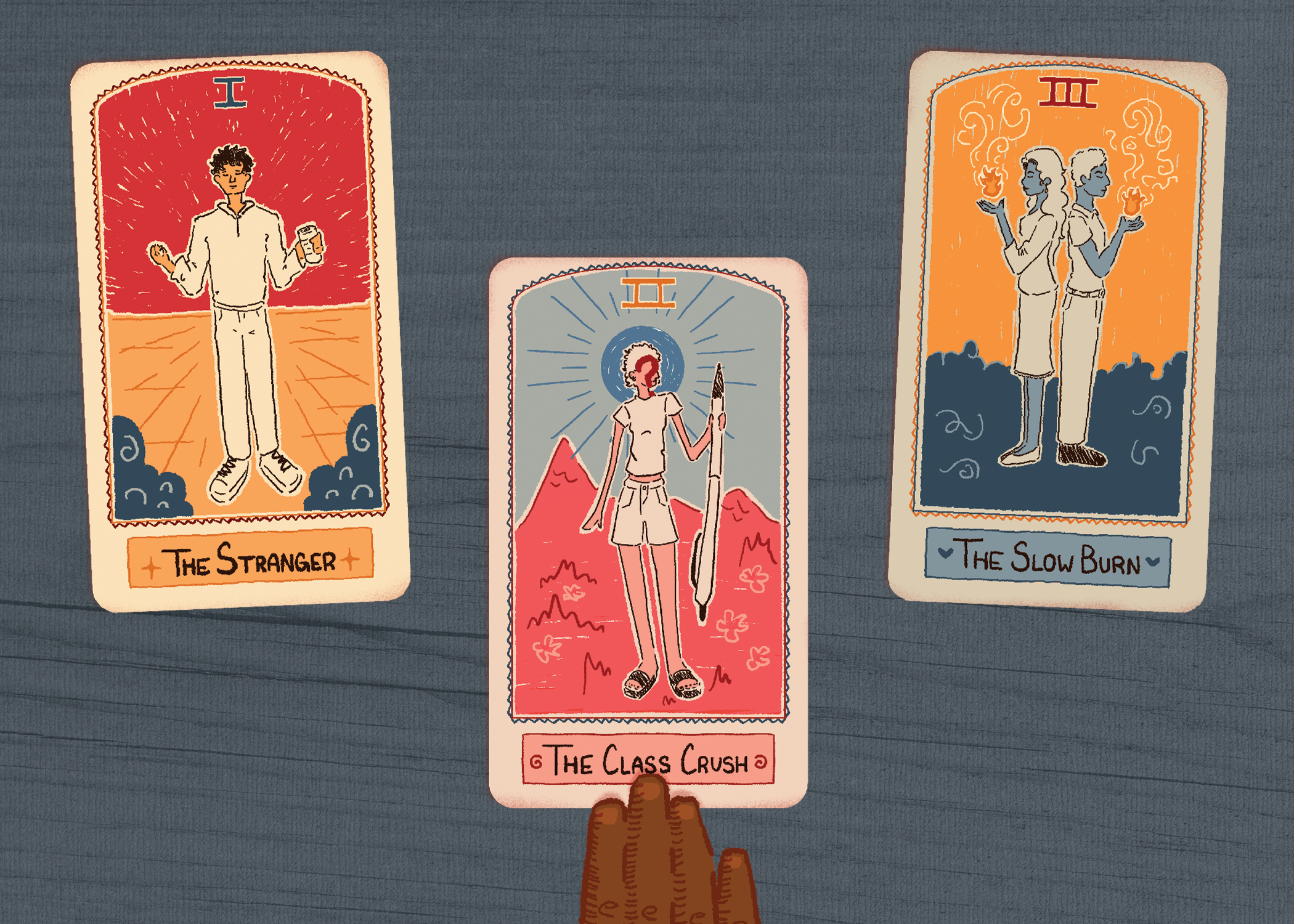

Imagine a triangle. Picture each side stretched equally between three points. The beauty of the triangle is that it exists in perfect tension: no preference to one side, no complicated stipulations.
The triangle method is a simple three-sided breakdown of one of the most agonized- over parts of the human experience: romance. Indeed, I’ve discovered dating can be as simple as one of the first shapes you learned in kindergarten.
This is how you meet people, this is how you have fun, and this is even how you find love. This is the method.
To disclaim, I’m no expert when it comes to dating. I’m more of a wannabe Carrie Bradshaw who just can’t help but wonder why dating in D.C. seems harder than surviving orgo. Sure, it’s no Manhattan, but in a city full of intelligent, interesting young people, what’s to explain such a lack of love?
Yes, the rumors are true: we’re in a culturally weird place for dating and romance right now. It seems like there’s always a new think piece, movie, or show (looking at you, Callum Turner sex purge movie) puzzling over why our generation isn’t finding love, or at least a night of fun flirtation.
If you ask me, we’ve become afraid of sacrifice and, more honestly, feelings that could eventually hurt us. We’ve invented
countless anxiety-ridden rules to keep us comfortably secure; our vocabulary has even expanded to define the undefinable—situationship (n.): guy who can’t commit.
This summer, I decided to conduct heels-on-the-ground research to answer the question: is it that hard? Without even realizing it, I built my triangle: the three types of people you should look for and hold in rotation when embarking on your dating journey. If I can do it, so can you.
I. The stranger
This is the rando you meet at the bar whom you approach when conversation’s slowed, drinks have flowed, and it’s that time of the night when everyone suddenly becomes attractive. This person has no connection to you. Whether they go to another school or are working a real-person job, you don’t care to understand; you will never see them again, unless you really want to. They’re your “I’m bored on a Thursday night,” and ideally, they have a car.
The stranger can add a perspective without the pressure that comes with premeditated attachment. The points of a triangle rely on each other, and in the case of the stranger, their job is to relieve the pressure from the other two points.
As much as you may find them endlessly fun and easy, the stranger must be rotated out about every month or so to avoid the
skeletons that emerge from the closet around month three.
Maybe my favorite thing about the stranger is that they give you an excuse to explore D.C. in search of them. So please,
schedule a triangle night with your friends to find your stranger.
II. The class crush
I’m especially fond of this point of the triangle, which sits right at the bottom, grounding the operation.
This is your day-dreamy, always-be- my-maybe. They’re around, but not ever-present, and it’s a thrill to remember that they exist. You could deliberately select the perfect class crush, but I recommend letting them come to you. Whether you’re bored in lecture or wanting to connect with your cohort, just start chatting—you’ll find that person who you keep falling into giggly conversation with instead of completing the assignment due at 11:59 p.m.
The class crush has benefits beyond balancing out your love life. There is no better feeling than remembering your class crush exists when your actual crush is fumbling. Plus, cheeky flirtation motivates you to pay attention or actually speak up in class
because you want to impress your crush who happens to be an anthropology nerd. Suddenly ancient artifacts are so sexy.
Long-term is not off the table for the class crush; the stakes are just lower. A semesterly rotation, provided that it hasn’t crept into anything real, is recommended.
III. The slow burn
This needs very little explanation. In some ways, the triangle itself is built around keeping this point in check.
You most likely met through a mutual friend or a roommate. Or, maybe they’re someone you’re already close to but have always wanted to be more. Whether you’re in a riveting talking stage or have just crossed into dating territory, the slow burn
hinges on the fact that you care. A lot.
The slow burn holds genuine stakes because you feel the most for them; you want this to work out. And that’s ok! If anything, it’s exciting to feel so strongly about someone.
I wish I had more advice on how to be chill about a slow burn, but unfortunately, that has never and will
never be me. And at a certain point, for deep feelers like myself, you come to accept that trying to be cool about it hurts more than anything else will.
The purpose of the other points is not to invalidate or ignore the potentially Jane Austen-worthy yearning you have for this particular person—hold onto that. It’s important to feel deeply, and it’ll make for some good stories down the line, success or not.
Of course, take your time with the slow burn—it’s easy to assume perfection in the people you want, even if they don’t deserve it. Desire
requires perspective, and that’s where the triangle excels.
The triangle is really there to remind you that one person can’t be everything. The triangle needs the tensions of each point to
exist (even if they think they’re all just lines). You can’t fall in love without the stranger, and you can’t have fun without the risk of something more. But most importantly, the triangle doesn’t exist without you to draw it.