

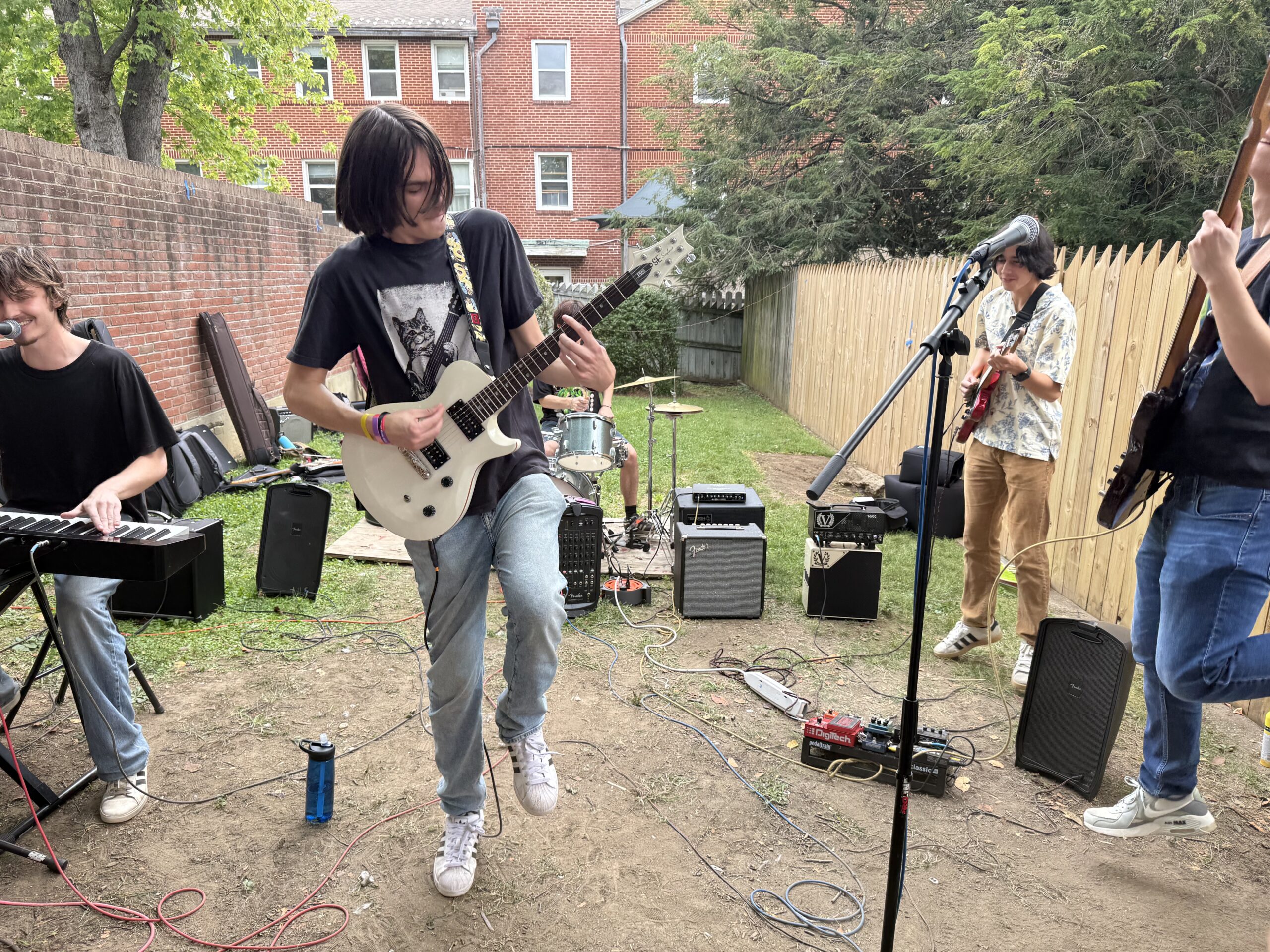
Georgetown student record label Prospect Records organized a benefit concert in support of disaster relief efforts in Nepal. The concert, which took place at 3619 O St., featured student indie bands Doll, Rumspringa, and The Pale Imitations. While the show was free to enjoy, they raised $272 from entry donations.
Flash floods in late August devastated Nepali communities, affecting over 84,000 people, including 32,000children, and claiming over 1,300 lives. As of mid-September, over 5,000 were still missing. After the floods decimated countless homes, roads, and bridges, thousands of families are struggling to access drinking water, nutritious food, healthcare, shelter, and schools.
Expert analysis indicates climate change may have contributed to the disaster. Though it was not the sole cause, scientists say rising temperatures and thawing permafrost could have led to the Himalayan glacier collapse that triggered the floods.
Following the benefit concert, funds raised from suggested admission donations were sent to Direct Relief, a humanitarian aid organization delivering emergency medical aid to Nepal.
The atmosphere of the concert was teeming with solidarity and support for Nepal. Rumspringa called the crowd to donate and played politically-charged songs like “Come Together” (1969). When an instrument cable was malfunctioning during Doll’s set, the musicians solved the problem while continuously jamming. Every student in the crowd commiserated with the miserable and futile pursuit of pre-professional opportunities in The Pale Imitations’ original song, “I Wanna Be A Consultant” (2026).
When The Pale Imitations’s Griffin Elliot (CAS ’27) yelled onstage, “Is everybody with me?” he answered himself. “Everybody’s with me! All my friends are here!” he exclaimed, as what ended up being the final song commenced. While a band next door continued thrashing, the concert was prematurely shut down by Residential Living.
In a post-show interview with Rumspringa, drummer Anthony Orphanos (CAS ’29) described the role Georgetown’s music scene plays in bringing our campus to life.
“It’s a community, it really is,” Orphanos said. “A lot of people involved in music can be really introverted, and this is a way that brings introverted people together and allows us to express ourselves. […] It helps me come out of my shell and feel more intact with Georgetown. This, in a way, is part of Georgetown’s spirit. The overall Georgetown spirit and the environment that we create at this school comes from students who want to create music.”
According to Georgetown musicians, the music community has to do a lot of heavy lifting to compete with the obsessive pre-professional ladder-climbing that defines the university culture. Yet, Rumspringa’s Jack Griffin (CAS ’29) explained how the Georgetown music scene somehow overcomes the desperate need to compete for internships and LinkedIn connections.
“It’s nice to see this sort of thing at Georgetown, even though, you know, all the competitive pre-professional stuff, there’s still a thriving art scene. Yes, we’re in the Guild of Bands class, and we’re all involved with different Georgetown music things, but this only exists because of students and because students want to see this happen.”
Doll’s Mia Ceasar (CAS ’26) echoed sentiments of community through campus music.
“The first club I joined was Jam, and that’s how I met pretty much everybody I know on this campus,” Ceasar said. So to me, socially at this school, it’s kind of everything. […] It has been such a great space, and people are very kind and accepting and super easy to talk to and jam with.”
Elliot Anderson (CAS ’28) is a guitarist and multi-instrumentalist for The Pale Imitations, and he is a current member of campus bands M.E.N. and Candidates. He has achieved veteran status in the music community at Georgetown, and playing in campus bands has been a foundational part of his college experience.
“Georgetown music is really everything to me. It’s expression, it’s vulnerability, it’s kindness,” Anderson said. I don’t know if I would be the person who I am at this school without Georgetown music.
He also emphasized the scene’s ability to create tangible social impact.
“I’ve been in a lot of activist spaces at Georgetown, and it’s always difficult to find a way that you can truly make a difference,” Anderson said. “These shows work, they do raise money, and they do actually make a difference.”
Georgetown’s music scene has commonly served as a space for the fusion of art and activism. The concert’s organizer and host, Sebastian Larsen (SFS ’27), said Georgetown has a “really strong historical track record” of benefit concerts, including events to raise money for relief in Palestine or to support Georgetown professor Dr. Badar Khan Suri after his unlawful ICE detention.
“Not only do they have the potential of raising pretty significant funding, it lets students do what they’re passionate about, do what they think is fun, but then in the service of something higher, which I think is always very special,” Larsen said.
Griffin Elliot (CAS ’27), a piano player and vocalist for The Pale Imitations, views the Georgetown music community in a wider rebellious light, as students find ways to use their musical talents to collectively fight against campus problems as well.
“[It] gives everybody a chance to feel adversarial against the administration, because they don’t like music on campus, and I think you need a healthy space to develop your muscle of being anti-authoritarian, and expressing that with music is probably the best way to do it,” Elliot said. “Everybody should learn to say no to people in authority who have whack ideas of how to live your life.”
Residential Living shut down the concert, which was inevitable—loud music and large congregations of people in a Georgetown townhouse are usually cause for the swift arrival of a community director. But, they held the concert anyway, put up posters with a donation link, and played their hearts out while they could because bringing people together to support Nepal was bigger than abiding by every residential rule.
To quote Patrick Collins (CAS ’28) of Doll—who said this phrase must make its way into the piece and was corroborated by the other Doll members and Ben Fang (CAS ’29) of Rumspringa—“music is so powerful.”
For Prospect Records, Doll, Rumspringa, and The Pale Imitations, music is the key to making strong communities that stand in unity and solidarity against those who try to take them down.