


As a newborn, I couldn’t be soothed by my mother’s amateur singing. I’d whine, cry, and spit in her face. My parents tried anything and everything, to no avail—until the house got cable and a new kind of lullaby arrived: Hilary Duff as Lizzie McGuire on Disney Channel. Finally, the crying stopped.
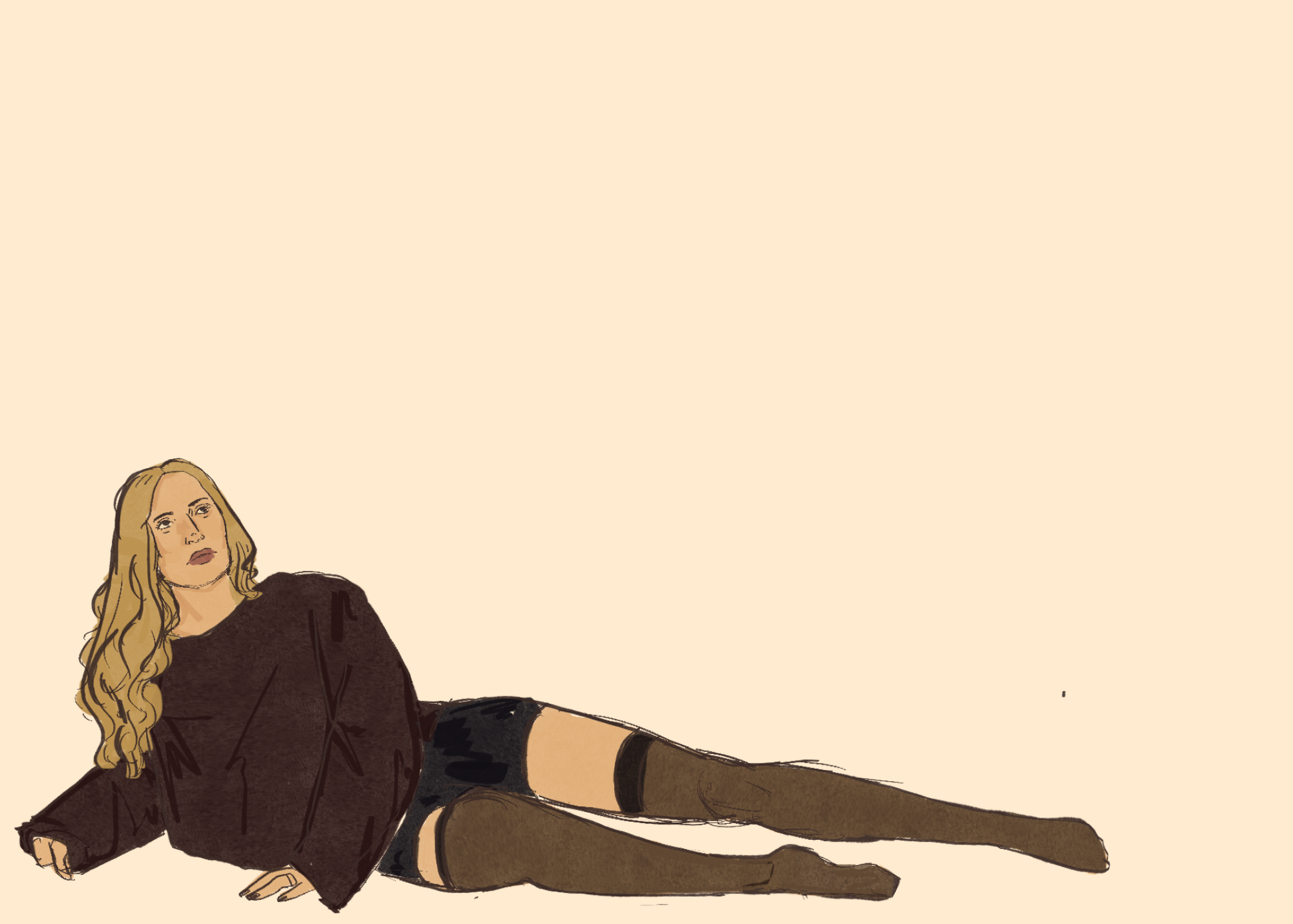
Two decades later, Duff is back at the poker table with new chips. Luck… or something (2026) is a comeback and a rebirth, proof that time can both soften a pop star’s image and sharpen her pen.
Most comeback albums either lean full tilt into nostalgia or pretend the past never happened. Here, Duff and her husband/collaborator Matthew Koma find a third lane: music that’s contemporary and commercially crisp while also spotlighting the granular interior life of a woman beyond her twenties. The production trades the maximalism of her past discography for hooky restraint—think bright choruses with occasional indie-folk textures—which allows the lyrics to breathe instead of burying them in gloss.
That said, what makes this record most compelling is Duff’s voice: not her instrument—though she is serviceable—but her perspective. Where much of mainstream pop continues to traffic in the aesthetics and lessons of youth (first heartbreaks, first hookups, first… everythings), luck… or something centers on complication: familial drama, marriage paranoia, intrusive thoughts, and the disorienting passage of time. While Duff’s pop career of the 2000s was never a beacon of confessional, thought-provoking lyricism, that shift is what makes this record so fabulous! Duff makes zero attempts to replicate formulas that may have once worked for her; instead, she creates a new template for herself. Duff is wordy, self-aware, naive, and mature—all at the same time.
This push-and-pull is palpable throughout. On the album’s second single, “Roommates,” Duff reminisces: “Back at the dive bar, giving you head / Then sneak home late, wake up your roommates.” The memory captures the album’s central tension, youthful recklessness rubbing up against the sharper self-awareness of adulthood. On the opening track, “Weather For Tennis,” she follows the rhythm of an argument with her significant other, singing, “You calling me batshit’s the fastest antibiotic for thinking you’re different this time.” She has writerly concerns for these songs, and through them flows the current of existentialism that underpins the album as a whole.
She’s also brutally honest about familial estrangement on the record. On “We Don’t Talk,” Duff sings about facing disconnection with someone who comes from “The same home, the same blood / A different combination, but the same lock,” alluding to her no longer having contact with her sister. “The Optimist” is the album’s sonic oddball, discussing Duff’s relationship with her father and detailing her visit to a hypnotist in hopes of learning how not to dream, seeing as she’s “got too much [she] thinks about.”
Elsewhere, in fizzier numbers like “Holiday Party,” the hooks seduce more directly: “In my head, you live another life / Where you fuck all my friends / And wish someone else could’ve been your wife.” The track’s pop sparkle masks a paranoid spiral—it’s a party anthem and a panic attack in one. But the album ties those moments together on “Adult Size Medium,” its rueful closer. Here, Duff holds up an old t-shirt to the sky; pulling on “holes of an adult size medium,” she asks how she arrived where she is today. The lyrics don’t dramatize aging, but rather watch it happen in soft, melancholic detail.
This vantage of a pop star interrogating the distance between the self who wore the shirt at 22 and the self who buys thermometers for her kids is the kind of story that mainstream pop seldom allows for. Hilary Duff is not reinventing the wheel, but the kinds of stories she chooses to share help expand our definition of who and what a pop star can be.
Despite its inherently formulaic aspects, pop music too often regurgitates the same emotional syllabus, and when the music industry prizes immediacy above all, the realities of life are flattened into a highlight reel. This ramification is significant because pop teaches just as much as it entertains; it offers models for how generations understand love, shame, loyalty, and sex in ways that are easy to metabolize.
Duff’s history as a child star alters the terms of this discussion and undermines the industry playbook. She grew up inside the syllabus she now refuses, which gives her a unique authority. She isn’t trading in nostalgia so much as she is translating the lessons she was taught into the language of maturation. Rather than perform expected roles—nostalgia act, influencer cameo, sacrificial relic—she treats adulthood as legitimate subject matter, with contradictory emotions, small humiliations, and the grind of responsibility.
Labels chase youth like a renewable resource, compressing careers into predictable cycles. Luck… or something resists that compression by highlighting songs about what comes next, all without sacrificing the hooks and clarity of pop music. Messy obligations! Lingering resentments! Petty marital catastrophes! The record’s smaller moments each add up into a coherent, age-aware record.
Sure, this isn’t a seismic shift in the pop universe, but it does broaden the conversation. Duff’s willingness to write plainly about estrangement, the slow erosion of self, and the trials and tribulations of grown life is an essential correction. Mainstream pop can thrive if it makes room for more individual, developed storytelling. Call it luck, or something else; either way, it’s a welcome change.