

In the six years since Phoebe Bridgers released her critically acclaimed sophomore album Punisher (2020), a lot has changed for the pandemic-produced indie darling. From the public scrutiny sparked by her breakup with actor Paul Mescal to the return of supergroup boygenius—fronted by Bridgers alongside musicians Lucy Dacus and Julien Baker—with its Grammy-winning debut the record (2023), it’s safe to say Bridgers’ almost three-year-long disappearance from the public eye was well earned.
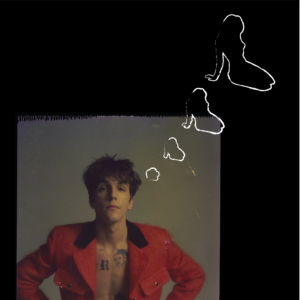
With her rapid rise in popularity, Bridgers has returned, ready to take on an international arena tour. But her comeback has been entirely on her own terms. After playing a series of secret pop-up shows, mainly across small-town America but culminating in an acoustic performance at Madison Square Garden, Bridgers announced the release of her latest LP, Lost Weekend (2026).
The album opens with Bridgers’ voice, heavily distorted, electronic, and echoey. On “The Outside,” listeners will immediately recognize her distinct songwriting style and dry humor as she sings, “Crying in a suit and tie / But you should see the other guy,” in reference to her late father—to whom the record is dedicated—at his own funeral.
Her father’s death garnered unwanted media attention while she was between solo projects. Bridgers was reportedly harassed and filmed at an airport while traveling to her father’s wake; the songwriter’s experience of grappling with a profound loss while constantly being publicly perceived haunts the album. On “The Governor’s Waltz,” she recalls “hiding in the bathroom like Shelley Duvall,” reflecting her feelings of vulnerability and a desperate attempt to escape the limelight while simultaneously rapidly rising to fame.
Inviting back her boygenius collaborators, Bridgers credits Lucy Dacus as a songwriter on “Haunted,” and both Dacus and Baker provide backing vocals on the track. Revisiting her disillusionment with the realities of fame, Bridgers warns that “If you’re gonna make a wish / Then you better be specific / You’re gonna have to live it every day.” Despite this sentiment, “Haunted” is undoubtedly one of the happier songs on the tracklist. Featuring a comparatively upbeat tempo and a bluegrass-inspired melody, Bridgers comes to a hopeful conclusion about moving forward after heartbreak in the most powerfully succinct lines on the album: “You won’t have to open a heart that’s broken / Water’s gonna flow in either way.”
Aside from her bandmates and best friends, Bridgers also introduces new voices on this record. She credits “Son-John Johnson” on “Kill Me” and “I Can’t Wait,” which is believed to be a pseudonym for Cameron Winter, lead singer of the Brooklyn-based rock band Geese, because of the familiarly Winterish voice on the background vocals. On the outro of “Kill Me,” Bridgers’ and Johnson’s voices intertwine over a build-up of electric guitar and pounding drums, sharply contrasting the bare acoustic guitar and simple vocals Bridgers begins this song with, as they repeat the Persian phrase “Tamám Shud,” which means, “It is over.”
On “Still Standing,” Bridgers directly addresses her tumultuous relationship with her late father. With her signature blunt lyricism, she cuts straight to the truth, admitting, “Feeling indifferent, wearing black / Sometimes I want you back / But not today.” Over a hopeful, intimate acoustic guitar arrangement, Bridgers seamlessly captures the emotion and nuance of grieving someone who has caused you pain. She confronts the reality of learning to process his death as she sings, “I can’t imagine you dead / But you are every day,” before finally resolving with gratitude for the experiences she shared with her dad, ending with a plain yet heartfelt, “Thank you for everything.”
Amid the ubiquitous themes of loss and heartbreak tying the album together, a source of joy suddenly emerges when Bridgers sings about a budding romance with comedian Bo Burnham on “Bobby,” a track that immediately hooked me. Bridgers comes in hot with a full band and a catchy shoegaze-inspired melody. She employs her typical dark humor once again, this time in a striking display of codependency early on in their relationship. She assures her lover, “If you didn’t like either one of my friends / I’d kill them, I’d kill them.” Her lyrics feel ironic given her typical support for female solidarity, as exemplified in her recent year-long run with boygenius, an all-female band. Yet her emphasis on the second repetition of “kill” evokes a slightly concerning sense of sincerity.
She circles back to the lingering theme of her gripes with fame yet again on the closing track, a reprise of the title track, as she solemnly sings, “When a dream comes true, a fantasy dies.” While her naive, idealized perception of fame may have been shattered by the reality of being surveilled by the paparazzi, even during her most intense moments of personal hardship and grief, she still lives out her younger self’s dream every day.
After taking the listener on a journey through her own cycles of loss, grief, and newly developing joy, Bridgers leaves her fans, who waited with bated breath for some sign of life from the singer, with a final piece of advice: “But if I ever come out of hiding / You won’t have to know how to find me again.” Phoebe Bridgers has come out of hiding this time, but her public presence is not a certainty; she does not owe the world her presence nor her art.