



Content warning: this article discusses depression, suicide, and self-harm.
A Georgetown family is suing the university for $10 million, alleging negligence in the 2023 death of a student, according to court filings accessed by the Voice.
The wrongful death suit was brought by A. Dean Stocksdale, the father of William Stocksdale, a Georgetown student who died by suicide on campus on May 18, 2023. The suit alleges that Georgetown’s actions, alongside those of the crisis intervention company, Protocall Services, caused Stocksdale’s death, due to their treatment of his mental health in the weeks preceding his suicide.
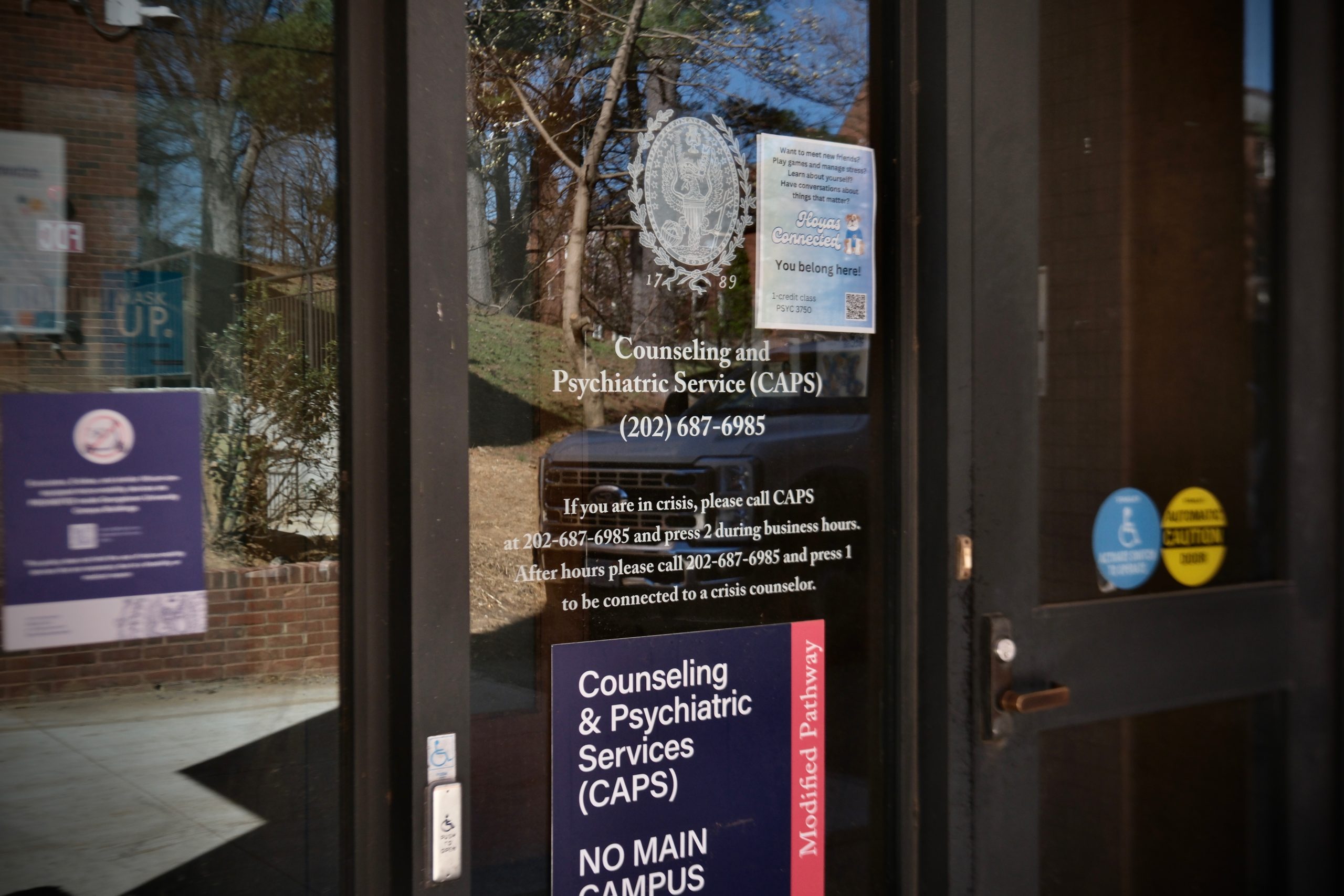
The suit, originally filed last summer in D.C. Superior Court and moved to federal court this February, alleges that physicians in Georgetown University’s Counseling and Psychiatric Services (CAPS) improperly classified Stocksdale as “very low risk” for suicide.
It also alleges that those physicians failed to properly review his medical records when he came to CAPS for support. If they had, CAPS would have caught inconsistencies in Stocksdale’s self-reporting of his condition, which should have raised red flags and changed how they handled Stocksdale’s case, according to the suit.
A university spokesperson as well as Stocksdale’s lawyers and parents declined to comment on the lawsuit, citing pending litigation. Protocall did not respond to the Voice’s request for comment.
Alongside Georgetown, the suit also alleges that Protocall improperly labelled Stocksdale as “having no risk related to self-injury,” according to the filings. Protocall is an Oregon-based company that provides 24/7 on-call crisis intervention for higher education institutions nationally.
Stocksdale was connected via phone with Protocall physicians by a Georgetown residential living employee in the hours immediately preceding his death; however, Georgetown declined to comment on the specific relationship between Protocall and the university.
Georgetown and Protocall filed their defenses on Jan. 28 and Feb. 3, respectively, with both entities denying medical negligence in their handling of Stocksdale’s case.
“Defendants deny that their acts or omissions caused the death of [Stocksdale],” the university’s lawyers wrote in their January defense.
At the time of Stocksdale’s death in 2023, Eleanor Daugherty, Vice President for Student Affairs, and Rev. Mark Bosco, Vice President for Mission and Ministry, wrote in an email to the Georgetown community that Stocksdale was a beloved member of the school.
“We are supporting Will’s family in this tragic time and reaching out to members of the Georgetown community who lived, worked and studied alongside him,” they wrote. “A student in the School of Foreign Service, Will was pursuing a degree in Global Business. A resident of Village C West, Will was active in many activities across campus including Students Advancing Food Equity, working as a Lifeguard at Yates Field House and Best Buddies.”
Inconsistencies in medical history
Stocksdale was diagnosed with anxiety and depression in high school and sought an appointment at CAPS in fall 2022, during his sophomore year, the filings detail. He was taken by the police to the University of Maryland’s St. Joseph Medical Center on March 17, 2023, after expressing to his parents that he wanted to take his own life.
While at St. Joseph’s, he told medical staff that he had not previously attempted suicide, but this was not true, according to the suit.
Nine days after being discharged from an overnight stay in St. Joseph’s, on March 27, 2023, Stocksdale had another appointment with CAPS. At that appointment, he expressed to the clinician that he had previously attempted to take his own life. After being told this information, the suit says that CAPS should have requested Stocksdale’s medical records from St. Joseph’s or attempted to speak to the medical professionals who treated him there.
“Had the CAPS clinicians undertaken this step, they would have discovered a vast inconsistency between what he was now telling the CAPS clinicians and what he had told the assessment team at St. Joseph’s,” the suit says. “Had the CAPS clinicians reviewed the St. Joseph’s records and discovered the inconsistency, they would have been on notice that [Stocksdale] was not a reliable historian when it came to his psychological condition.”
According to the suit, CAPS classified Stocksdale as “very low risk” for suicide after that appointment, despite being made aware of his previous attempt.
“By mislabeling [Stocksdale] as very low risk for suicide, the CAPS counsellors implemented an inappropriate treatment plan on the basis of that misdiagnosis,” the suit says. “Had [Stocksdale] been properly diagnosed as high risk for suicide, the CAPS counsellors could have implemented a different treatment plan that would have, more likely than not, saved [Stocksdale’s] life.”
The suit also writes that the day before this appointment, Stocksdale’s ex-boyfriend, at the time, had forwarded messages between himself and Stocksdale to “Georgetown University’s Emergency Services” in which Stocksdale stated his intent to take his own life. It is not immediately clear to whom the messages were forwarded, as there is no official university resource by that name; however, according to the filings, at some point during the time that Stocksdale was seeking help from Georgetown’s support services, CAPS received copies of these texts.
Georgetown’s defense responded that while Stocksdale “discussed his feelings of depression with CAPS,” he ultimately “declined counseling services.”
Labelled “no risk”
On April 4, 2023, Stocksdale’s ex-boyfriend again alerted “Georgetown University’s Emergency Services” that Stocksdale had shared with him that he was planning to take his life. That night, Stocksdale’s community director facilitated a 26-minute phone call between him and a mental health clinician employed by Protocall. While the call itself was categorized as urgent, and Stocksdale expressed a desire to not be alive anymore, he also denied having attempted suicide in the past and said he didn’t have any access to lethal means, according to the filings.
The Protocall clinician, in consultation with her supervisor, assessed Stocksdale as “having no risk related to self-injury.” According to the report logged by Protocall about the call, the two employees concluded that no more action was needed.
“The call was assessed as urgent because of the person of concern’s thoughts of suicide, apparent plan contemplation, and likely access to means; however, a higher intervention was not warranted as the person of concern denies having a desire to act on suicidal thoughts and has no history of attempts,” the report says, as quoted in the suit.
However, in the suit filings, Stocksdale’s lawyer writes that if the clinician or her supervisor had consulted Stocksdale’s medical chart, they would have seen that he had previously told CAPS that he had attempted to take his life. The Voice could not verify whether HIPAA regulations, which protect the privacy of patients, would have allowed Protocall to access Stocksdale’s chart or if the community director knew of Stocksdale’s mental health history
“Had [they] simply consulted [Stocksdale’s] chart, they would have seen that the history he was providing them was wrong. [Stocksdale] had previously told the counsellors at CAPS that he had made an attempt to take his life,” the suit says.
Stocksdale died by suicide later that night. He was 20 years old.
“Below the standard of care”
In March 2025, the Stocksdale family consulted Dr. Lawrence Amsel, a professor of clinical psychiatry at Columbia University, for an independent opinion on the handling of Stocksdale’s case. His findings were submitted alongside the lawsuit in summer 2025.
“It is my opinion to a reasonable degree of medical certainty that Georgetown University, its staff and leadership, including Georgetown University Counseling and Psychiatric Services […] fell below the standard of care in dealing with Mr. Stocksdale,” Amsel wrote.
He reached the same conclusion for Protocall’s physicians.
Amsel noted, “There appears to have been an habitual attempt to downplay the risk level Mr. Stocksdale was experiencing across multiple staff,” particularly given the texts provided to Georgetown employees from Stocksdale’s ex-boyfriend, as well as Stocksdale’s medical history.
Statue of limitations questions
Georgetown and Stocksdale’s estate had a dispute this summer regarding when the case was filed in relation to the two-year statute of limitations on medical malpractice, as well as the required 90-day notice before filing such a case.
A judge ultimately ruled in July that the case should proceed and waived the 90-day notice requirement. Before filing the case, Stocksdale’s lawyers had requested a settlement for an undisclosed amount of money, according to documents filed in the D.C. Superior Court.
When originally filed, the case listed only Georgetown as a defendant, but during a hearing on Jan. 16, Stocksdale’s attorney moved to add Protocall to the case. On Feb. 18, the case was moved from the local D.C. Superior Court to the U.S. District Court for D.C., a federal trial court.
If you or someone you know is considering suicide, help is available. Call or text 988 for 24-hour, confidential support, or visit 988lifeline.org.
Help available
Suicide and Crisis Lifeline: 988
Crisis Text Line: Text SHARE to 741741
Teen and Young Adult HelpLine: 1-800-950-NAMI (6264), or text Friend to 62640.
The Trevor Project’s crisis hotline for LGBTQ+ young people: call 866-488-7386 or text START to 678-678.