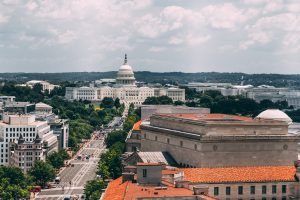



This summer, while many of us were far from campus, our city was turned into a monument to the nation’s 250th anniversary. While this presented an opportune moment for national reflection, the Trump administration instead spent millions reaffirming its model of U.S. identity through the celebration of cisgender white men.
Despite an end to the “Summer of Trump,” America’s 250th year continues. As students at an elite institution in our nation’s capital, we have the opportunity and imperative to resist attempts to sanitize, commodify, or exceptionalize this anniversary. When despots attempt to rewrite our nation’s history to exclude and harm, our responsibility is to stand in opposition. We should spend the rest of this 250th year celebrating our nation’s progress and acknowledging its failures.
We did not get to this point by accident—in fact, we nearly had a very different national celebration of the country’s anniversary. For a little bit of backstory: in anticipation of the occasion back in 2016, Congress created the bipartisan U.S. Semiquincentennial Commission, known as America250, to put on a patriotic celebration of the country’s 250th anniversary. However, President Trump undercut the bipartisan plans in favor of his own celebration agency called Freedom 250. While America250 celebrates American exceptionalism through a more palatable concoction of tradition, service, and entrepreneurship, Freedom 250 was much more on the nose in its showcase of American greed, corruption, exclusivity, and excess.
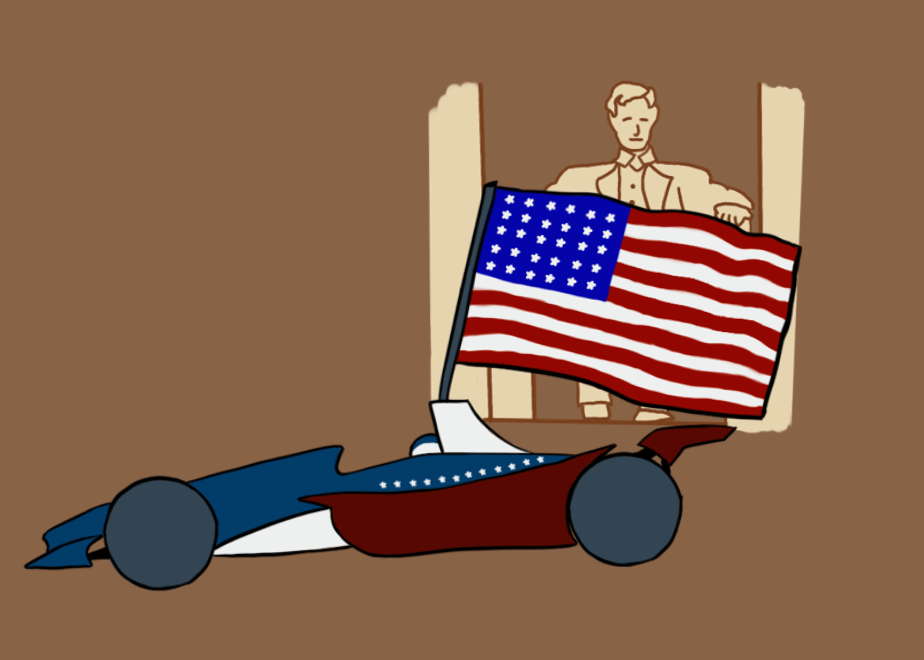
Essentially every Freedom 250 event, from an Ultimate Fighting Championship (UFC) on White House grounds to Trump’s “America Prays” campaign, flattens American history and identity. Worse, our own city of Washington, D.C. was the designated breeding ground for much of this flattening, from the National Mall becoming inaccessible for months because of the Great American State Fair to road closures for the Freedom 250 Grand Prix even delaying our Capitol Campus’ move in. We will never know exactly how America250’s celebrations would have compared to Freedom 250, but we can be pretty sure based on its website that it would not provide the kind of critical introspection that the country so desperately needs. There is simply no escaping the fact that the U.S. was—and still is—a settler colonial project founded and built upon genocide and slavery. Any history that does not begin with that uncomfortable fact fails to fully grasp what this country continues to be after two and a half centuries.
Our indignation and efforts at cultural change cannot, however, end with Trump. Whether it is the Smithsonian museums or Georgetown University, institutions that historically supported white supremacy are often guilty of their own sanitization, much like America250. The Smithsonian’s and Georgetown’s reckonings with their slaveholding pasts are monumentally better than the alternative proposed by Trump, but most university students know that. History is surely not something to be forgotten or revised to make it neater. For the most part, museums and universities avoid these revisionist practices, but they risk making other formidable mistakes.
The U.S.’s common tendency to run from its history manifests across our communities. The National Museum of the American Indian and the National Museum of African American History and Culture paint pictures of past brutality, which cannot be forgotten but are ultimately in the past. Georgetown, likewise, treats its Race, Power, and Justice course like a history lesson, failing to tell students about its present worker abuses, genocide funding, and erasure of Black history.
We don’t mean to carelessly liken Georgetown’s administration to our fascist government, but rather point to the fact that Trump’s attempts to flatten and censor history are not unique. The issues present in our nation’s founding are just as clear today, and the single most patriotic thing we can do is organize against them.
There is no doubt that the white supremacist views propagated by Trump normalize racism and hatred in the name of patriotism. That kind of sentiment emboldens our peers to spew the same bigotry and hate, seen mostly clearly when a university-funded club publicly proclaimed that “Muslims have no place in American society.” At Freedom Plaza, the Trump administration re-erected a statue taken down during the 2020 Black Lives Matter protests of a lesser-known founding father named Caesar Rodney, who enslaved up to 200 people. On campus, descendants of the more than 314 individuals enslaved and sold by our university continue to fight for adequate reparations, while the university has failed to fully implement a 2019 student referendum to establish a student reconciliation fund fee.
There are lots of other things at Georgetown and in our country that are less than spectacular, but we don’t need to tell you that. What we may need to remind you of, though, is that our country and our university are not just those things. Countries are not borders or governments or financial institutions, and universities are not administrations or political clubs or even student newsmagazines. All we are, at the end of the day, are people, and that is spectacular. Every single moment, the U.S. is created and reshaped and begun anew as the people within it change. The forces that plague the U.S. have been around for far longer than 250 years, and in 250 years they will still exist. But—here’s to hoping—we will too. We will change and grow, and our country will, too.
Honoring our country means honoring each other. Stand up for those around you—workers, minorities, queer people, immigrants, women, the disabled, unhoused, and everyone else too. After a summer meant to sow division, the best thing we can respond with is unity and solidarity.
The editorial board is the official opinion of The Georgetown Voice. The editorial board operates independently of the Voice’s newsroom and the General Board. The board’s editorials reflect the majority opinion of the board’s members, who are listed on the masthead.